



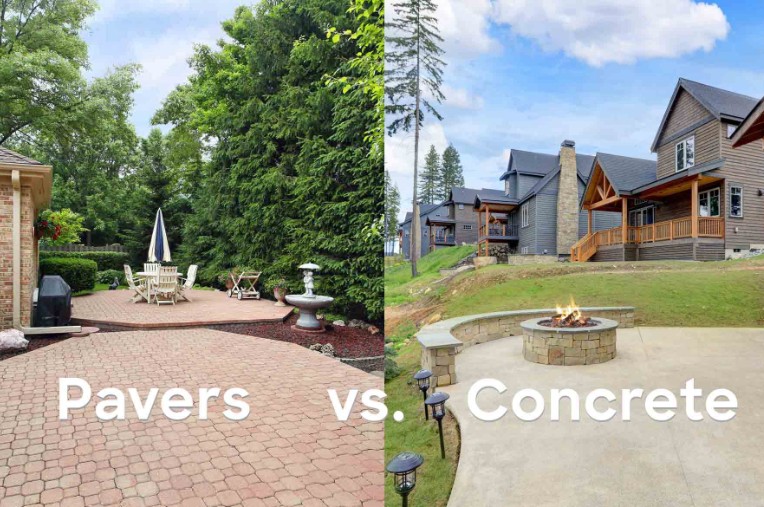
When you own a rental property, every upgrade has to pull double duty. It needs to attract quality tenants and hold up with minimal oversight between leases. Outdoor living space is one of the highest-impact improvements you can make, but the material you choose matters more than most landlords realize. The two most common options, poured concrete and pavers, differ in cost, durability, maintenance burden, and long-term ROI. Here is what property owners should know before committing to either one.
Upfront Cost: Concrete Has a Clear Advantage
For a standard 300 to 400 square foot patio, poured concrete typically runs between $6 and $12 per square foot installed, depending on your market and site conditions. Pavers range from $10 to $25 or more per square foot once you factor in the excavation, compacted gravel base, edge restraints, and polymeric sand joints. On a 350-square-foot patio, that difference can easily reach $3,000 to $5,000.
That gap widens if you are building patios across multiple rental units. For investors managing a portfolio of properties, the per-unit savings from concrete add up fast. And if you want a decorative look without the paver price tag, Colorado Springs stamped concrete patios offer patterns that replicate the look of natural stone, brick, or slate at a fraction of the material and labor cost.
Maintenance: The Hidden Cost That Landlords Underestimate
This is where the decision gets real for rental property owners. Pavers require ongoing attention that concrete simply does not. Polymeric sand washes out over time and needs to be reapplied every one to three years. Weeds and grass push up through joints. Individual pavers shift, settle unevenly, or crack, creating trip hazards that expose you to liability. Fire ants and other insects often colonize the sand base in warmer months.
Concrete, by contrast, needs a pressure wash once or twice a year and a fresh coat of sealer every two to three years. That is the full extent of routine maintenance. For landlords who are not on-site daily, or who manage properties remotely, this simplicity is a significant operational advantage.
The real issue is that tenants will not maintain pavers. They will not pull weeds from joints, sweep sand back into place, or report minor settling before it becomes a bigger problem. What starts as a beautiful paver patio can look neglected within a single lease cycle if the tenant is not attentive. Concrete holds its appearance with far less intervention.
Durability and Lifespan in a Rental Environment
Both materials can last 25 years or longer when properly installed. However, how they age in a rental setting is very different. Concrete handles heavy patio furniture, grills, foot traffic, and the general wear of tenant turnover without much issue. A properly poured and reinforced slab with control joints will resist cracking through freeze-thaw cycles common in climates like Colorado's Front Range.
Pavers are technically repairable since you can pull out and replace a single unit, but that assumes you have matching pavers on hand. Manufacturers discontinue colors and styles regularly. After a few years, finding an exact match can be difficult or impossible, leaving you with a patchwork look that hurts curb appeal rather than helping it.
There is also the base issue. Paver installations depend on a carefully compacted aggregate base. If the base was not done correctly, or if drainage conditions change over time, entire sections can shift and become uneven. Fixing a failed paver base means pulling up the surface, re-excavating, re-compacting, and relaying everything. That repair can cost nearly as much as the original installation.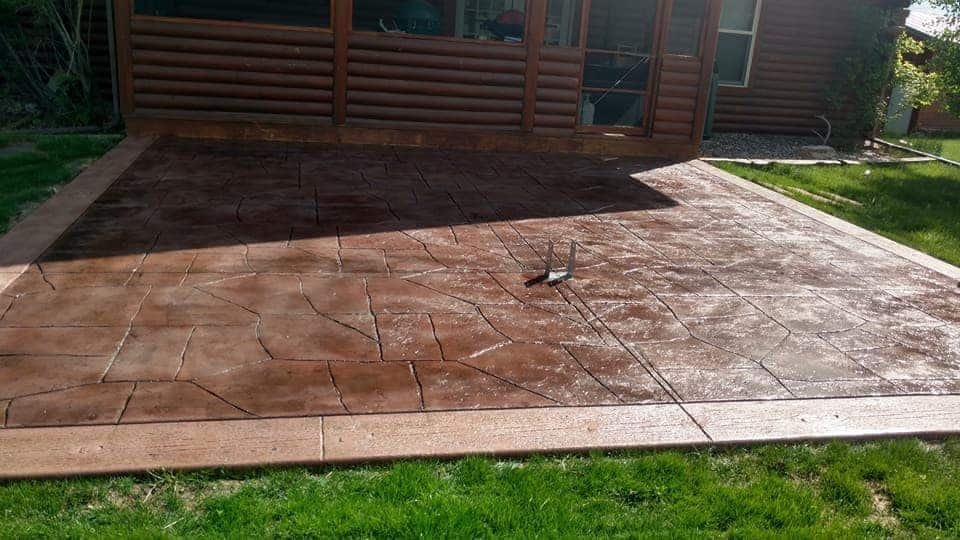
Tenant Appeal and Rental Value
A well-finished patio adds real rental value. According to the National Association of Realtors, outdoor living features consistently rank among the top improvements that attract tenants and justify higher rents. A patio does not need to be elaborate to deliver that return. A clean, well-sealed concrete slab with defined edges and a simple furniture layout photographs well in listings and gives tenants a functional outdoor space they will actually use.
Stamped or stained concrete can push the perceived value even higher. A stamped patio with an ashlar slate or herringbone brick pattern reads as a premium feature in listing photos. Prospective tenants see the texture and color and assume high-end materials without knowing the actual cost. For landlords, that perception gap between cost and perceived value is exactly where strong ROI lives.
Insurance and Liability Considerations
Uneven surfaces are a slip-and-fall risk, and rental property owners carry that liability. Pavers are more prone to becoming uneven over time due to settling, root intrusion, and base erosion. While concrete can crack, a properly jointed slab rarely develops the kind of raised edges and wobbling surfaces that pavers do.
Some property managers report that insurance adjusters flag poorly maintained paver patios during inspections. Keeping pavers level and stable requires a maintenance commitment that most landlords and their tenants simply will not sustain over the long term.
The Bottom Line for Rental Property Owners
Pavers have their place. They look beautiful in owner-occupied homes where the homeowner takes pride in maintaining them. But rental properties operate under different rules. The best materials for rentals are the ones that look good on day one and still look good three tenants later with minimal upkeep.
Concrete wins on upfront cost, long-term maintenance, durability in high-turnover environments, and liability risk. When you add decorative options like stamping and staining into the mix, the aesthetic gap between concrete and pavers shrinks to almost nothing while the practical advantages remain.
For landlords focused on maximizing returns and minimizing headaches, poured concrete is the smarter investment.





