


Every home follows a predictable maintenance cycle. Materials age, systems wear down, and seasonal weather place stress on structures. Preventive care focuses on identifying these patterns and addressing issues before they become expensive repairs. Property owners who adopt a structured maintenance routine protect their investment and reduce costs.
Seasonal Exterior Inspections
Exterior surfaces endure constant exposure to weather. Seasonal inspections help identify early signs of deterioration. Spring and fall are particularly useful periods to evaluate siding, windows, gutters, and drainage systems.
Gutters should be cleared of debris to ensure proper water flow away from the structure. Downspouts must direct water far enough from the foundation to prevent pooling or erosion. Inspecting seals around windows and doors helps prevent moisture intrusion and improves energy efficiency.
Roof inspections should also be part of seasonal maintenance. Missing shingles, damaged flashing, or blocked ventilation can lead to water damage if ignored. Early detection allows for minor repairs rather than major replacements within residential roofing systems.
Mechanical System Checkups
Homes rely on mechanical systems that operate continuously throughout the year. Heating, ventilation, and air conditioning equipment requires periodic service to maintain performance and prevent breakdowns.
Changing air filters regularly improves airflow and indoor air quality. Annual inspections from qualified technicians can identify worn components before failure occurs. Water heaters also benefit from routine flushing to remove sediment buildup, which improves efficiency and extends equipment life.
Electrical panels and outlets should be evaluated periodically to ensure safe operation. Flickering lights, warm outlets, or frequent breaker trips may indicate underlying electrical issues that require professional attention.
Interior Maintenance and Structural Care
Preventative care inside the home focuses on surfaces, plumbing fixtures, and structural elements. Small leaks under sinks or around appliances can cause significant damage if left unaddressed. Checking plumbing connections and monitoring water pressure reduces the likelihood of hidden moisture problems.
Interior walls and ceilings should be observed for stains or cracks. These signs may indicate water intrusion or settling that requires further evaluation. Floor surfaces also benefit from routine inspection. Loose tiles, worn grout, or uneven flooring can develop into safety hazards over time.
Documentation and Maintenance Planning
Effective preventative care depends on the organization. Maintaining a home maintenance log helps track service dates, repairs, and inspection findings. Documentation allows property owners to monitor patterns and plan future maintenance more accurately.
A yearly maintenance calendar can divide tasks into manageable intervals. Exterior inspections, system servicing, and interior evaluations can be scheduled throughout the year rather than all at once.
Professional inspections also play a role in long-term planning. Contractors, electricians, and plumbing specialists provide insight into system condition and projected replacement timelines. Planning ahead allows homeowners to budget for upgrades and avoid emergency repairs.
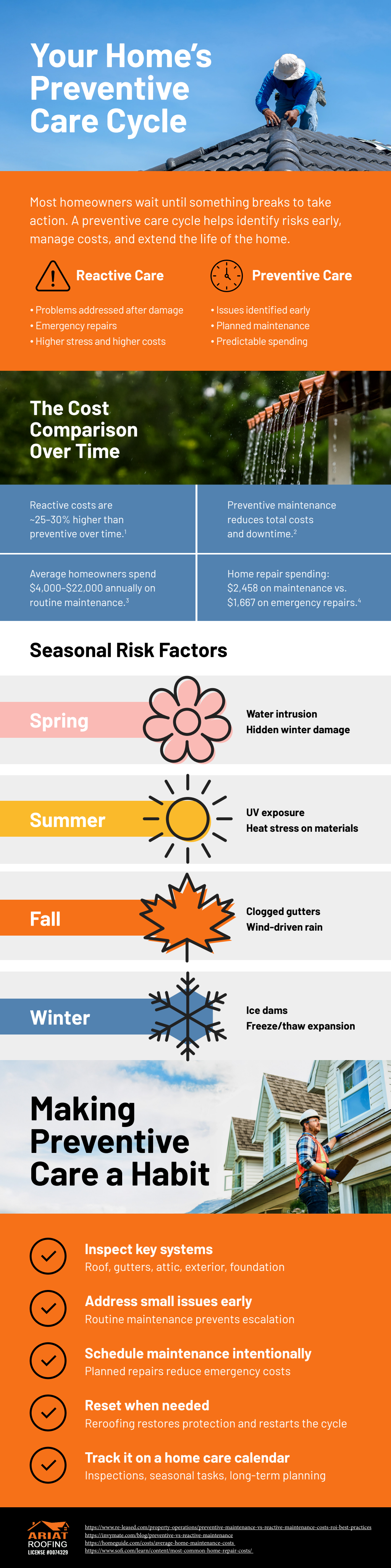
Preventative care follows a natural cycle that reflects how homes age and interact with their environment. Seasonal inspections, system maintenance, and consistent documentation help property owners stay ahead of deterioration. A structured approach protects property value, supports safety, and ensures that the home continues to perform reliably year after year. For more information, look over the infographic below.
Infographic Embed Code: