



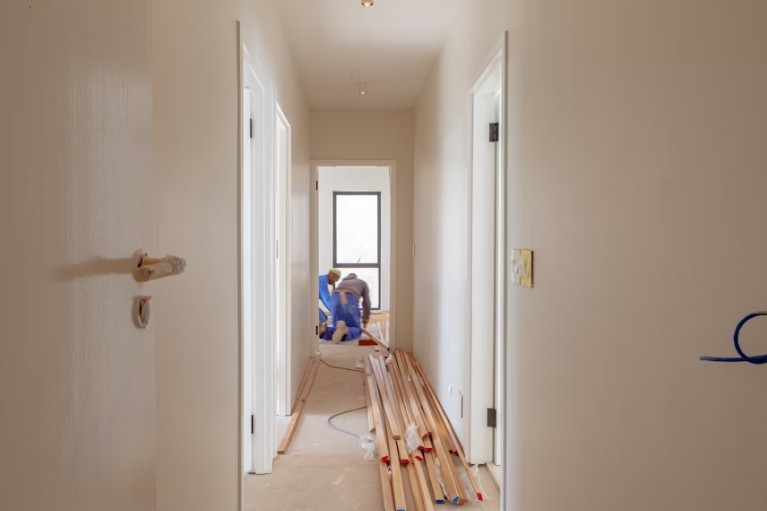
Want to stop throwing money away on renovation projects?
No real estate investor enjoys renovations. But if you learn how to set a renovation budget (and stick to it), you can avoid wiping out your profits.
Here's the secret…
Successful renovation budgets are thorough and well planned.
Most renovation budgets fail because investors overspend without proper planning. And home improvement contractors take advantage of that.
Fortunately, smart renovation budgeting isn't difficult. You just need the right advice.
What you'll learn:
Why Most Renovation Budgets Fall Apart
Setting A Renovation Budget That Works
Finding Trustworthy Home Improvement Contractors
Where To Spend Your Renovation Dollars
Tracking Expenses Like A Pro
Why Most Renovation Budgets Fall Apart
First off, let's talk about why renovation budgets blow up.
Most investors fail to plan ahead with a realistic renovation budget. They drive through the property, give a home improvement contractor some pricing guidelines and hope they came up with a good estimate.
Guess what happens?
Your home improvement contractor significantly underestimates your renovation costs. Then you have to either come up with more money or cut important renovation work.
According to Clever Real Estate, 53% of homeowners went over budget after hiring a contractor. Most real estate investors fall victim to the same problem.
Poor estimates and changing material costs are the biggest cause of renovation budgets blowing up. Home improvement contractors who provide estimates without a detailed inspection are playing roulette with your budget.
That's why not having a contingency fund is the worst mistake you can make. Your renovation budget needs to account for surprise expenses. Plan on spending 10-20% more than the quoted cost. That little buffer goes a long way towards keeping you out of the red.
Setting A Renovation Budget That Works
Successful renovation budgeting starts long before contractors arrive onsite.
Seasoned investors have a workflow for effective budgeting. It looks something like this:
Drive through property with contractor
Get 3 competitive quotes for work to be done.
Verify the estimated After Repair Value (ARV).
Calculate Renovation Budget by working backwards from ARV.
You can't spend money you don't have. Before doing any renovations, verify the estimated ARV is correct and should support the purchase price. Then deduct your desired acquisition price from the ARV.
Subtract your desired acquisition price and other expenses from the ARV to arrive at your maximum budget.
Here's a quick example:
(ARV – Costs – Desired Profit) = Renovation Budget
($300,000 – 50,000 – 40,000) = $210,000 max budget for purchase + renovations.
Once you know your maximum spend, you can set your renovation budget.
Keep in mind, you should never spend more than 70% of your estimated ARV on renovating and purchasing a home.
Finding Trustworthy Home Improvement Contractors
Home improvement contractors can be the difference between your renovations going smoothly or pulling all your hair out.
Many real estate investors skimp on contractors and regret it later.
You get what you pay for.
Here are some things to look for when hiring contractors:
Contractor experience with real estate investors.
Require detailed written estimates
Check references with other real estate investors
Contractors who specialize in working with real estate investors already understand renovation budgets and cash flow. They provide itemized estimates so you know exactly where your money is going.
As with anything in real estate, references are your best friend. Find trusted contractors who come highly recommended from other investors.
If your contractor has your best interest in mind, they will make sure you spend your budget where it matters most.
Kitchen and bathroom remodels are typically where investors spend most of their budget.
Why? Because the returns are highest when updating kitchens and bathrooms.
A kitchen or bathroom remodel is one of the best home improvements for return on investment. So it makes sense to spend the majority of your budget there.
Where To Spend (& Where To Save) Your Renovation Dollars
When planning your renovation budget, it's important to know what brings value and what doesn't.
Here are some areas that you should spend your money on:
Updated kitchens: fresh cabinets, countertops and modern appliances
Updated bathrooms: new fixtures, tile and vanity updates
Curb appeal: paint, landscaping and front door
Don't overspend in neighborhoods that can't handle the upgrade. Things like high-end countertops may not return your investment in the right market.
Additionally, you should avoid spending money on:
Changing the home layout
Custom features
Granite countertops (too expensive)
Structural changes are extremely costly. If you can avoid moving walls and changing the home's layout, your budget will thank you.
Instead, focus your budget on increasing the home's value like kitchens and bathrooms.
Home remodeling hit an all-time high in 2024. Spending surged to $603 billion according to the NAR 2025 Remodeling Impact Report.
As a result of all this spending, material and labor costs are higher than ever. Lock in your prices early and buy your materials in bulk if possible.
Tracking Expenses Like A Pro
Here's a big tip that most real estate investors don't do.
Keep track of your money.
Far too often investors set a budget, then simply let their contractors run wild.
By the time expenses are due, it's too late to pull out. Always be aware of where your money is going during renovations.
Here's an easy way to keep your budget on track.
Create a spreadsheet with the contractors estimated line items.
Track actual costs as your home improvement contractor provides them.
Compare the costs against the contractors estimates weekly.
Identify any line items that are trending over budget.
This will allow you to identify budget problems early on. If framing is over budget after week two, it's time to make adjustments.
Another tip, always request lien waivers from your contractor and any subcontractors used. You don't want your property to be damaged due to your contractor not paying his team.
Wrapping Up
Setting and following a realistic renovation budget is critical to your success.
Again, renovation budgeting 101 looks like this:
Set renovation budget based off ARV
Hire an experienced contractor that knows how to work with investors.
Spend the majority of your budget on the kitchen and bathroom.
Plan for unexpected costs. Build in a 10-20% contingency fund.
Track every dollar spent during the renovation process.
Budgeting doesn't have to be complicated. By following the steps above, you'll be setting yourself up to win before you even purchase the property.
Remember, budget too high and you risk losing money. Budget too low and you risk not being able to complete the project.
Find that sweet spot and watch your renovations run smoothly.