



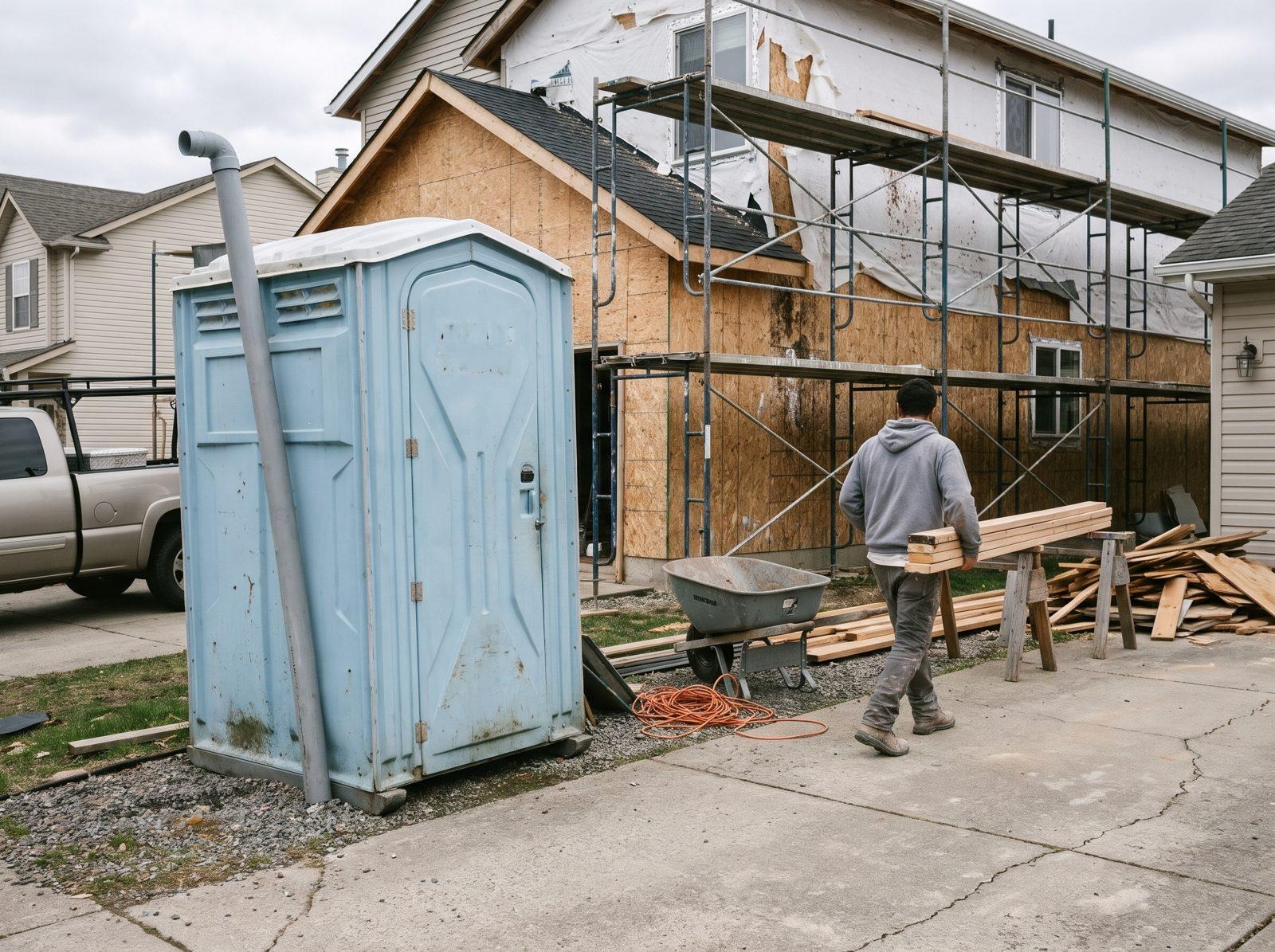
A six-week kitchen and addition project sounds simple until day two. The crew of six needs a bathroom, and nobody wants them tracking through a finished home. Most owners underestimate the restroom question until a contractor raises it, and by then they’re choosing in a hurry.
This guide covers the economics of renting versus buying, the OSHA minimums that set how many units you need, and the duties that come with owning one. Our position is simple. Renting wins for one-off jobs. Buying only pays off for owners who run projects back to back and are willing to handle servicing themselves.
When Renting Makes Sense (and When It Starts to Cost You)
For a single renovation, a rental is hard to beat. The vendor delivers the unit, services it on a schedule and hauls it away when you finish. You never touch the waste, and you never find storage space for a plastic booth between jobs.
Owners with several units on a rolling renovation schedule see the math shift. Paying monthly fees on every job adds up, which is why many start comparing a porta potty for sale against their yearly rental bills. It’s a fair question, but the answer depends on numbers most people haven’t run yet.
According to a 2026 rental-cost guide from Porta Potty Calculator, a standard unit runs about $75 to $150 per day for short rentals, $100 to $225 per week and $150 to $400 per month. Accessible (ADA) units cost 15 to 30 percent more, and luxury trailers can reach $300 to $600 per day. Sources disagree on exact figures, and most of them are written by rental companies, so treat these as ranges.
If your project is a major remodel, our post on preparing a property for a major renovation explains why a portable restroom and handwash station belong in the plan before demolition starts.
What a Purchase Really Costs

A new standard unit costs roughly $600 to $1,500, according to a 2026 Rent Viking price guide. Accessible models start around $1,600 and can top $5,500, and restroom trailers cost far more. The sticker price is only the start.
Here’s the trap. One rental company’s guide, Hegens Golden Pig Rentals, works through a contractor paying $250 per rental. A $1,000 unit appears to break even after four rentals. Then the guide adds four pump-out visits at $100 each, plus supplies, transport and storage, and the break-even point stretches to ten, twelve or even fifteen rentals.
Treat that as one vendor’s estimate, not a rule. But the logic holds. Every month you own the unit, you also pay for hauling, disposal, chemicals and a place to park it. An owner who needs a restroom on site three or four months a year will usually come out ahead renting. An owner who needs one nearly year-round across several properties has a real case for buying.
What OSHA Expects on Your Job Site
Your crew size sets a legal floor. Under OSHA’s sanitation standard, 29 CFR 1926.51, sites with 20 or fewer workers need at least one toilet. Larger sites need one toilet seat and one urinal per 40 workers, and sites with 200 or more workers need one per 50. Where there’s no sewer connection, chemical, privy, recirculating or combustion toilets are allowed.
Condition matters too. In a 2006 letter of interpretation, OSHA said an unsanitary toilet doesn’t count toward the required minimum. A unit that’s overdue for service can leave you out of compliance even if it’s standing on site.
Size your order to your biggest crew day, not your average one. When framing, plumbing and electrical trades overlap, headcount can double for a week. Our guide to preparing for a large outdoor project or addition covers how to schedule trades so the peak doesn’t catch you off guard.
Servicing and Waste Disposal Duties for Owners
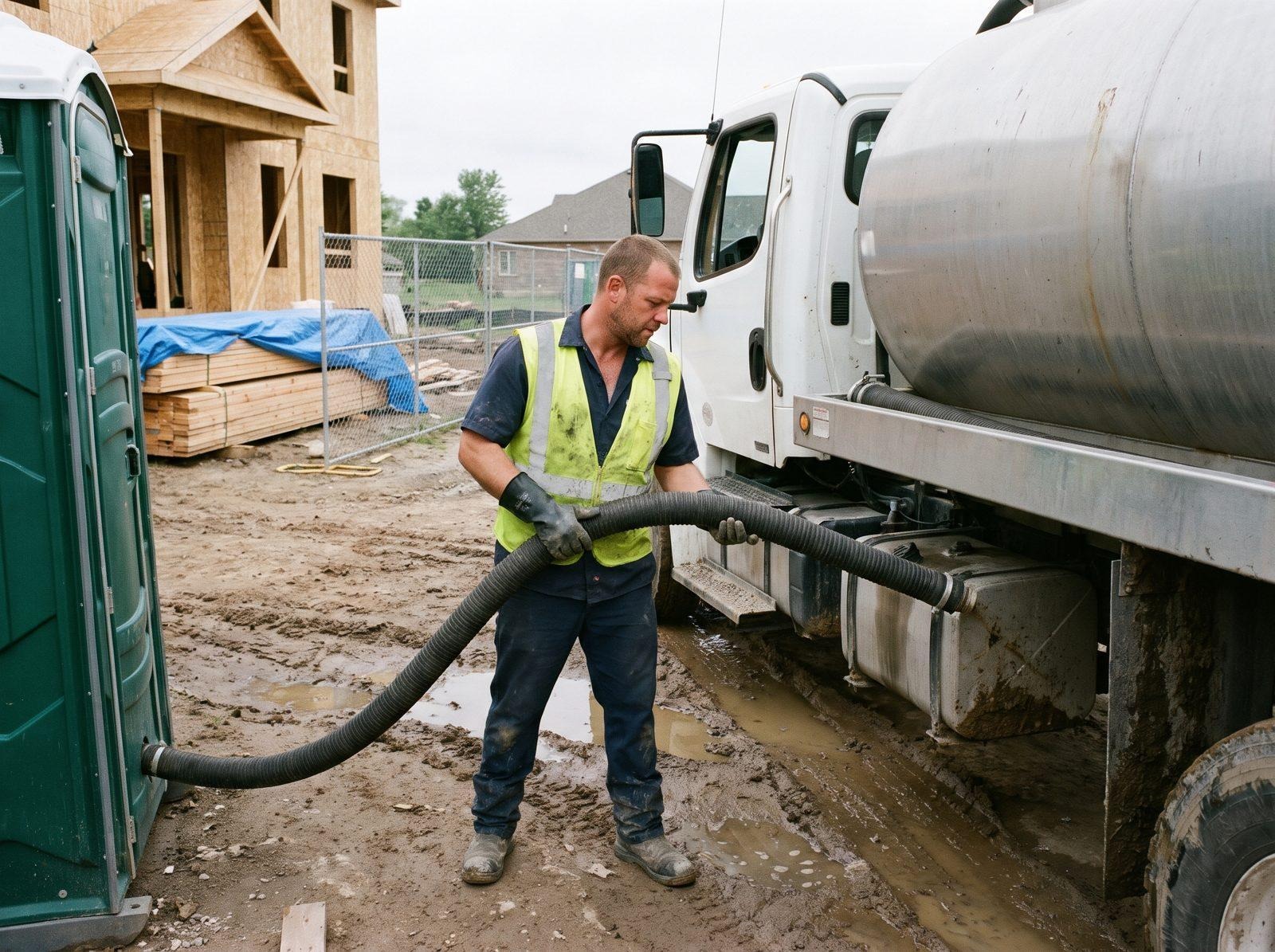
This is the part buyers forget. When you rent, the vendor handles the waste. When you own, it’s yours.
The EPA classifies portable toilet waste as domestic septage. Federal rules under 40 CFR Part 503 apply to haulers and land appliers, while permits and disposal locations are set by state and local authorities. The EPA’s septage and biosolids resources are a good starting point, and your county health department can tell you where you’re allowed to dump. In practice, most owners hire a licensed hauler or use a permitted dump station. The EPA also cautions against formaldehyde-based deodorizers, so check the chemicals before you buy them.
Frequency matters as well. We’ve noted in our piece on keeping public venues clean that restrooms at large events need attention every 15 to 30 minutes. A job site won’t need that pace, but a crew of ten in a hot month will empty a tank faster than you’d expect.
A Quick Rent-or-Buy Checklist
Run through these before you sign a rental agreement or place an order:
Project length: how many weeks or months will you need the unit?
Frequency: how many projects do you run each year?
Crew size: does your peak headcount require more than one unit?
Storage: do you have a secure spot to keep it between jobs?
Waste: who hauls it, where does it go, and what does that cost per visit?
Accessibility: does any site need an ADA-compliant unit?
Local rules: does your city or county restrict where units can sit or be dumped?
As a rule of thumb, if you need a restroom for under about three to four months a year in total, rent. Beyond that, run your own numbers with servicing included. That threshold is our editorial judgment, not a published statistic.
The Bottom Line
Rent for the one-off remodel, the single addition or any job where you don’t want to touch waste. Consider buying when you run overlapping projects, have storage and a hauling plan, and can show on paper that ownership beats your rental bills after servicing costs. Whichever way you go, count heads first. OSHA’s minimums, not your budget, decide how many units you need.