



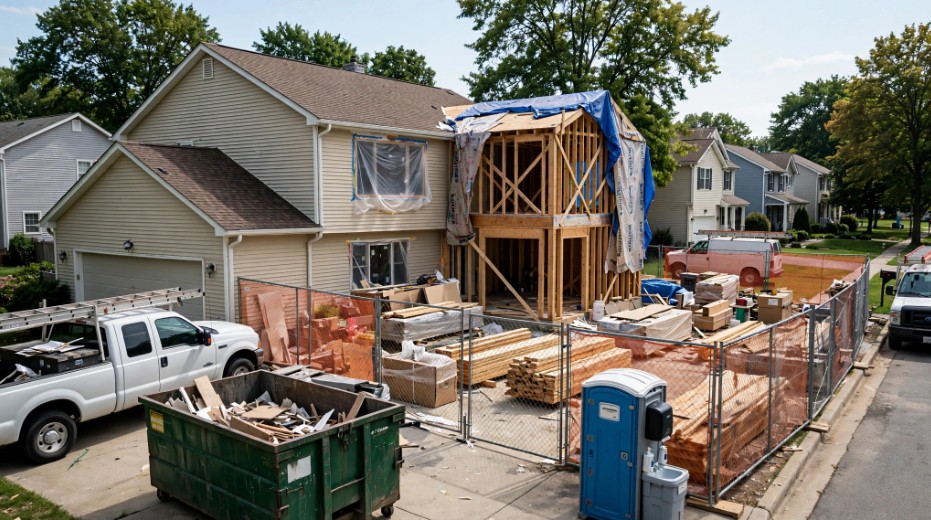
Embarking on a full kitchen overhaul, master bathroom reconfiguration, or structural home addition is an exciting investment in your property's value and livability. However, the realities of active construction, with heavy trade foot traffic, airborne drywall dust, demolition debris, and disconnected plumbing utilities, can quickly overwhelm a residential household if the site is not properly prepared.
Bottom Line Up Front: Successful home remodeling relies on establishing clear physical boundaries between living zones and active construction spaces before demolition begins. Setting up temporary security fencing, establishing dedicated sub-trade parking and access routes, sealing HVAC return vents, and installing on-site temporary sanitation facilities preserves homeowner privacy, prevents property damage, and ensures worker efficiency throughout the renovation lifecycle.
Phase 1: Pre-Demolition Utility Isolation & Indoor Air Protection
Before general contractors and trade crews bring heavy tools and demolition saws onto your property, taking proactive measures to protect your living environment is essential:
Isolate HVAC Air Ducts: Seal all supply and return air registers in the renovation zone with heavy plastic sheeting to prevent fine drywall dust, sawdust, and VOCs from circulating into your bedrooms, following health protocols from the CDC Healthy Homes Renovation Guidelines.
Establish Zip-Wall Containment: Install floor-to-ceiling plastic dust barriers equipped with commercial magnetic entry zippers to isolate construction noise and dust.
Protect Hard Flooring and Pathways: Cover finished hardwood, tile, and carpeted hallways with heavy-duty, breathable floor-protection boards, taped securely along every seam.
Phase 2: Outdoor Perimeter Security & Site Access Management
A major remodel involves dozens of subcontractors, including framing carpenters, plumbers, electricians, and drywall tapers, moving materials in and out daily:
According to recommendations from the National Association of Home Builders (NAHB) Remodeling Guidelines, establishing a secure perimeter protects children, pets, and neighbors from active hazard zones:
Install Temporary Site Fencing: Enclose staging areas and roll-off dumpster zones with 6-foot panel fencing to prevent unauthorized access and contain loose construction debris during windy conditions.
Designate Material Staging Zones: Assign a specific section of the driveway or side yard for lumber, tile pallets, and pipe drops to keep walkways clear.
Protect Mature Landscaping: Erect orange safety netting around prize trees, irrigation lines, and delicate garden beds to prevent soil compaction from heavy equipment.
Phase 3: Worker Support & Sanitation Logistics
A frequently overlooked element of residential remodeling is accommodating the daily physical needs of trade workers while keeping the interior of the home secure, as mandated by the OSHA Residential Construction Safety Standards.
As Justine Fisher, owner of Sierra Sanitation, a leading provider of portable bathroom rentals and sanitation services in Visalia, explains, site preparation preserves home sanity:
"When homeowners embark on a major kitchen or bathroom remodel, they often forget that contractors need dedicated facilities from day one. Setting up a dedicated on-site portable restroom and handwash station prevents construction crews from tracking drywall dust and debris through the living areas of your home, keeping your personal space clean and private."
Phase 4: Contractor Ground Rules and Communication Protocol
Establish a clear written daily protocol with your lead contractor before work commences:
Define Daily Work Hours: Clarify acceptable arrival and departure times (typically 7:30 AM to 5:00 PM) in accordance with neighborhood noise ordinances.
Specify Parking Zones: Designate where trade trucks and utility trailers may park to prevent blocking neighbor driveways or fire hydrants.
Establish End-of-Day Sweep Standards: Require daily magnetic sweeps of driveways to pick up stray drywall screws and nails that could puncture vehicle tires.
Summary Homeowner Remodel Preparation Checklist
HVAC Isolation: Tape plastic over all air vents in the remodel zone.
Floor Protection: Lay impact-resistant protective boards across all traffic paths.
Site Sanitation: Arrange delivery of a standard portable restroom and handwash station for contractor crews.
Perimeter Fencing: Secure dumpsters and open trenches with temporary chain-link panels.
Valuables Secured: Move delicate wall art, electronics, and valuables away from shared partition walls.