



I measured my Melbourne rental twice last month, once with furniture in place, once without. The difference was 4.2 usable square metres, I hadn’t noticed.
Most renters lose workable floor area because they buy pieces first and improvise zones later.
The Australian Bureau of Statistics (ABS) reported that in August 2024, 36% of employed Australians usually worked from home, and the rate reached 60% for managers and professionals.
That shift pushes desks, screens, and call setups into rooms designed for living, not focused work.
If you’ve knocked your knee on a badly placed bookcase or had an agent question a wall mark, you already know the cost of poor planning.
A better setup doesn’t require drilling or a big spend. It starts with measurements, portable partitions, and furniture sized to your circulation paths.
Plan the zones first, buy once, and move out without repair surprises.
Space Planning for Rentals: Know Your Constraints
Design within your lease and state rules so your workspace doesn’t become a breach notice or a bond dispute.
In Victoria, renters can make several minor changes without permission, including some picture hooks, wall anchors on permitted surfaces, and non-permanent window film. Other changes require written consent and can trigger a modification bond or a make-good requirement at the end of the lease.
Across Australia, the practical rule is consistent: if a change alters the building fabric, penetrates tiles, or needs trades, assume you need written approval.
Use your condition report as your baseline. Photograph the area before you start, keep packaging and install guides, and store any removed fittings so you can restore the space quickly.
The Victorian Government has also flagged plans to legislate a broader right to work from home from September 2026. If that proceeds, rental-friendly work zones will stop being a “nice to have.”
Measure Once, Zone Twice: A Rental-Friendly Framework
Start with a tape measure and a power-point map, then zone for focus, calls, and storage without touching walls.
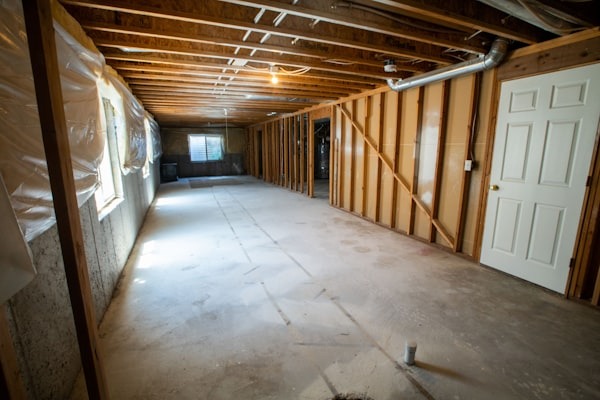
Step 1: Survey. Record room dimensions, ceiling height, window orientation, and every power and National Broadband Network (NBN) point. Note obstacles like split-system heads, radiators, and door-swing arcs.
Step 2: Circulation. Aim for 1,000 mm clear paths between major pieces. Keep 400–600 mm reach zones around desks, and never reduce an exit route or block a door.
Step 3: Light plan. Place desks perpendicular to windows to reduce glare. Add a dimmable task lamp and adjust until you reach 320–400 lux on the work surface.
Step 4: Acoustic plan. Identify hard reflection surfaces, then add absorption where you sit and speak. Start with rugs, heavy curtains, and upholstery, then consider removable acoustic panels if reverberation remains.
Step 5: Sketch two options. Test one layout built for quiet focus and another built for shared use. Choose based on call frequency, daylight, and where your cables can run safely.
Partition Playbook: Privacy Without Drilling
Pick separators you can remove in under an hour, that don’t block egress, and that preserve daylight.
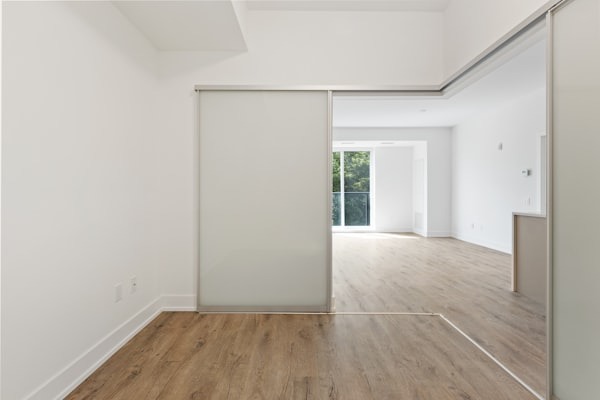
Freestanding screens deliver instant separation and pack down easily at move-out. Choose fabric or felt facings if you want absorption, and check base stability on hard floors.
Tension-mounted rods with curtains pressure-fit between walls with no holes. A ceiling-to-floor drape improves privacy and reduces echo, but keep fabric clear of doors, vents, and heaters.
Open bookcase dividers interrupt sightlines and add storage in one move. Load the lower shelves to reduce tipping risk, and only use anti-tip straps where your lease permits anchors.
Demountable modular panels provide the best control in rooms that need real separation. Keep panel heights clear of smoke alarms and sprinklers, and plan the simplest disassembly path for move-out day.
Type | Privacy | Light | Acoustic Benefit | Install Time | Best for Renters
|
|---|---|---|---|---|---|
Freestanding screen | Medium | Preserved | Low to medium | 5 min | Short leases |
Tension rod + curtain | High | Reduced | Medium | 15 min | Studios |
Open bookcase | Low to medium | Preserved | Low | 20 min | Storage-short rooms |
Demountable panels | High | Variable | High | 30–60 min | Leased suites |
Office Partitioning Systems in Melbourne
Commercial tenants in Melbourne get the best outcomes from partitions that reconfigure fast and simplify make-good at lease end.
Demountable glass and acoustic panel systems can divide a sub-50 m² suite into quiet-focus and collaboration zones while preserving sightlines and light. Specify panel locations around doors, detectors, and supply air so the layout works for day-to-day operations, not just the floor plan. For Melbourne tenants fitting out a leased suite, it helps to compare demountable glass and acoustic options via office partitioning systems in Melbourne so you can plan reconfigurable layouts that still allow end-of-lease make-good.
Mallaby Fitouts can also measure your site and supply removable partition solutions suited to short lease terms and quick changes.
Light, Glare, and Acoustics: Get Focus Fast
Most work-from-home distractions drop sharply once you hit usable light levels, reduce glare, and add basic absorption.
For lighting, upgrade the desk surface first, not the ceiling. A stable task lamp with a dimmer lets you reach 320–400 lux without altering the property, and it travels with you to the next place.
For glare, place monitors side-on to windows and use blinds you can adjust during calls. Removable static-cling film can add privacy and soften harsh contrast without leaving adhesive residue.
For sound, treat the room, not the microphone. A rug under the desk, heavy curtains on glass, and upholstered seating reduce reflections, and filled bookcases behind your camera position make voices sound less “tinny.”
If you need more control, removable acoustic panels rated with a high Noise Reduction Coefficient (NRC) can reduce reverberation, especially on bare plasterboard opposite your desk.
Comcare also recommends the 20-20-20 rule for eye strain: every 20 minutes, look at something 20 feet (about 6 metres) away for 20 seconds.
Ergonomics That Fit Rentals
Dialling in chair height, screen position, and reach zones prevents pain faster than buying premium gear.
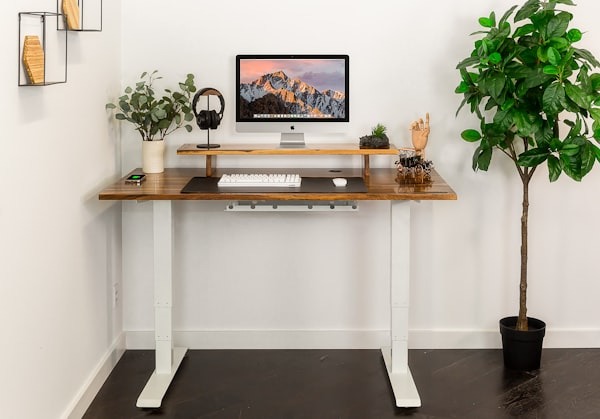
Chair: Set seat height so knees and hips sit at roughly the same level. Maintain lumbar support, and add a footrest if your feet don’t rest flat.
Desk: WorkSafe Queensland notes fixed sitting desks typically sit around 680–720 mm high. If you use a sit-stand converter, set the surface near elbow height and keep wrists neutral.
Monitors: Position the top of the screen at or slightly below eye level, roughly an arm’s length away. If you run dual displays, centre the one you use most and angle the other inward to reduce neck twist.
Peripherals: Keep the keyboard and mouse directly in front, 10–15 cm from the desk edge, so shoulders stay relaxed and elbows don’t flare.
Movement: Change posture every 30 minutes, even if it’s only standing during a call or walking while reviewing notes.
Safe Cable Management
Cables become trip hazards fast in small rentals, so route them off walkways and keep power boards out of traffic lines.
Use adhesive cable clips or under-desk trays within their rated loads, and run cords along skirting rather than across open floor. Never trail leads through doorways, and avoid “daisy-chaining” power boards.
3M Command hooks can support renter-friendly cord routing when applied to clean surfaces and used within published limits, such as 2.2 kg for large utility hooks up to 6.8 kg for mega hooks.
Compliance and Safety Checklist
Keep exits clear, respect fire separations, and stick to reversible changes so safety and tenancy requirements don’t collide.
Fire and Rescue NSW warns never to prop open fire doors or leave items in fire stairs, because those doors must close to contain smoke and heat.
Partitions and curtains must not reduce egress routes or cover sprinklers, smoke alarms, or ventilation outlets.
Provide adequate lighting at every workstation, then use task lighting to hit desk-level targets without glare.
Follow your state’s modification rules, request written consent where required, and plan restoration before installation.
Explore Custom Office Desks
A desk that matches your room’s exact dimensions can recover space that standard furniture wastes.
Odd alcoves and tight corners are only “awkward” when the desk depth, leg clearance, or drawer swing doesn’t match the space. A made-to-measure desk can integrate cable grommets, monitor arms, and storage while keeping that 1,000 mm walkway intact. When you want a one-time piece that fits your exact footprint and cable needs without drilling into walls, you can explore custom office desks designed to suit the nook rather than forcing the room to suit the desk.
Naturally Timber can build made-to-measure desks that prioritise comfort and layout efficiency, and they move with you when you change rentals.
Four Rental-Friendly Floor Plans
These proven layouts keep privacy, light, circulation, and storage in balance, even when the room is doing double duty.
Studio (30–38 m²): A tension-rod curtain separates sleep and work without blocking the whole window wall. Maintain a clear 1,000 mm path from entry to key doors, then use a low open bookcase to hold work items and keep the bed zone visually quiet.
One-bedroom (50–60 m²): Build a desk niche near daylight, then add a freestanding screen behind the chair to define the work zone. Route cords along skirting with adhesive clips so the living room stays clear.
Share-house room (10–12 m²): Choose a compact desk, around 120 cm wide, with a felt desk screen to block visual distractions. Use under-bed storage for files and peripherals so your floor area stays open.
Small leased suite (25–40 m²): Set an L-run of desks with a 1,000 mm main aisle, and place freestanding screens between work points. Put the meeting table near natural light, but keep it out of the main circulation line.
FAQ
These answers cover the few issues that trigger most bond disputes and day-to-day work-from-home friction.
Can I put up a partition without permission?
Freestanding screens, tension-mounted curtain rods, and open bookcases are typically non-permanent and reversible, so they usually don’t require consent. If a partition needs fixings, alters tiles, or affects building services, get written approval first.
How wide should walk paths be?
Aim for 1,000 mm clear width wherever you can. It aligns with accessible design guidance from the ABCB and keeps circulation comfortable in tight rooms.
Will hooks and adhesives cost me my bond?
Not when you use removable products within their load ratings and follow the surface prep steps. Test a small area first, remove slowly, and keep any tabs or release strips until move-out.
How do I reduce echo in a bare room?
Start with soft layers: a rug under the desk, heavy curtains on windows, and upholstered seating. If the room still sounds “live,” add removable acoustic panels with high NRC ratings to the largest bare wall.
What lighting level should I aim for at the desk?
Target 320–400 lux on the work surface for routine office tasks. A dimmable task lamp usually closes the gap between ambient light and what your eyes need for sustained screen work.
Find the Perfect Coffee Table and TV Unit Set
Smart living-room storage matters because your video-call backdrop and cable clutter affect how your work reads on screen.
In studio flats where the living area doubles as a meeting space, closed storage helps you clear peripherals fast and keep walkways open. A matched unit can also provide safer cable routing for modems, consoles, and power boards, and it gives you a consistent backdrop that’s easier to reset between calls; if that’s your challenge, find the perfect coffee table and TV unit set for compact, cable-aware options.
For renters balancing living and working in one room, a coordinated coffee table and TV unit combination can keep the space visually calm and simpler to reset after hours.
Measure first, keep circulation paths clear, and choose partitions and furniture you can remove without damage. You’ll work with fewer distractions now and leave without last-minute repairs later.