



6 Simple Questions To Ask Before Moving
Most retirement relocation searches start with the same three variables: price per square foot, zip code, and climate. Those details matter, but they leave out the factors that shape daily life for the next two or three decades.
Assessing how safely you move through a home, whether your healthcare follows you, and whether the community you land in actually sustains you becomes critical. The six questions below reframe the search as a health-and-home decision, not just a real estate transaction.
1. Does the Home Support Daily Movement and Accessibility?
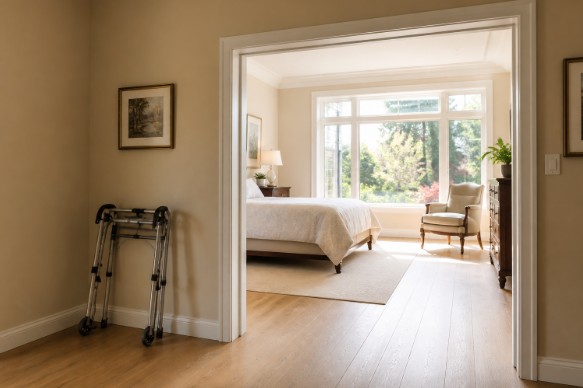
Evaluate if you can navigate the floor plan safely today and whether that will hold in ten years. With more than one out of four older people falling annually, prioritizing single-level layouts provides the best foundation. Narrow doorways remain prohibitively expensive to widen later.
Look behind the bathroom drywall to ensure proper blocking exists for future grab bars. Retrofitting safety features into finished tile costs significantly more.
2. Is There Space, Power, and Ventilation for a Wellness Area?
Without rigid work calendars, dedicating space for daily health habits becomes highly practical. Make sure to ask whether the property features a viable room to support your specific equipment. Heat and light therapy units carry infrastructure requirements that buyers frequently underestimate during a walk-through.
The electrical and spatial planning a dedicated setup involves becomes clearer when evaluating options like Sun Home Saunas' red light sauna for a new wellness space. These units require adequate floor clearance, dedicated circuits, and proper ventilation. Consult a licensed electrician before committing to a floor plan.
Pro Tip: Before committing to a home, verify the candidate wellness room’s electrical capacity and ventilation. A personal infrared sauna typically needs a dedicated 20-40 amp circuit, 4x6 ft floor space, and adequate heat management. Consulting an electrician early avoids costly retrofits. |
3. How Close Are Routine and Emergency Healthcare Services?
Distance to medical care is best measured in drive time rather than miles. A rural property twelve miles away often requires a lengthy commute, as beneficiaries in non-metropolitan areas are more likely to report traveling more than 30 minutes to see a primary provider. Map the route to the nearest emergency room at different times of day to check for traffic delays.
Confirming that primary care physicians operate within a manageable distance prevents long-term logistical headaches. Keep in mind that heavy traffic or seasonal weather can easily double an expected commute time when you need immediate care. Research local urgent care clinics alongside standard hospitals to ensure comprehensive medical access.
Important: When evaluating healthcare proximity, measure realistic drive times, not just map distance. A rural 12-mile route could take 35+ minutes. Test the ER commute at different times and seasons to avoid surprises. |
4. Would You Travel for Physician-Led Diagnostics or Longevity Care?
Adults increasingly pursue health assessments that go beyond standard annual physicals by consulting practices that offer physician-led longevity treatments at The Longevity Centers of America.
Expanded hormone panels, metabolic markers, and environmental exposure screenings require specialized clinical settings. Finding these targeted interventions locally can prove difficult depending on your new zip code.
Relocating to a lower-cost geographical area frequently means trading immediate local access to these advanced modalities. Before finalizing a move, determine whether your new location allows for manageable periodic travel to a trusted clinic. Factoring this necessary travel time into your broader relocation plans prevents disruptions in specialized care.
5. What Housing and Wellness Costs Belong in the Budget?
Most relocation budgets center entirely on the initial purchase price and property taxes. The recurring costs that follow a move actually carry equal importance, yet buyers consistently undercount them during the planning phase. Housing expenses like homeowner association fees and routine exterior maintenance add up rapidly.
Shifting to a new climate alters utility costs significantly, especially when cooling a southern home or heating a northern property. Accessibility modifications also add several thousand dollars to the first-year budget if the property requires structural retrofits. These structural retrofits demand dedicated line items in your first-year remodeling budget.
Healthcare and wellness costs demand specific line items in your financial model. Health insurance premiums vary widely by state. Out-of-network specialist fees become substantial if preferred providers fall outside the new coverage area.
Travel expenses to access specialized care carry both time and financial burdens. Dedicated wellness infrastructure also generates ongoing operational expenses. Equipment purchases, replacement filters, and the electricity draw from dedicated circuits belong in your annual budget to ensure accurate financial modeling.
Key Insight: The sticker price of a home is just the start. Recurring costs HOA fees, utilities in a new climate, accessibility retrofits, and out-of-network healthcare can cancel purchase savings. Build a comprehensive annual cost model before comparing markets. |
6. Does the Move Preserve Social Connection and Support?
Research consistently links social connection to long-term health and overall physical well-being. Isolation risk actually remains one of the most consistently underestimated variables in modern relocation planning. Evaluate the structural realities of your social network explicitly before committing to a new region.
Determine if family members live within a reasonable driving distance or if visiting them requires expensive cross-country flights. Take time to investigate whether the new area features established groups that match your interests closely enough to build genuine relationships. Local chapters of national organizations provide the easiest entry points for new residents.
Practical support networks become progressively more valuable over the decades. Neighbors who check in and friends who can drive you to a medical appointment function as vital personal infrastructure. Local services for home maintenance and reliable healthcare transport represent equally important pillars of community support.
Building entirely new social connections after a move takes intentional effort and a realistic timeline of at least one to two years. Relocating to a desirable climate with no existing social anchor provides a fundamentally different experience than moving closer to family. Weigh this necessary social rebuild as heavily as the physical floor plan.
The Bottom Line
Retirement relocation operates as a health-and-home decision rather than a simple housing transaction. The six questions above form a practical checklist encompassing physical accessibility, medical proximity, ongoing costs, and critical social continuity. Identifying a dedicated space for wellness equipment requires confirming electrical and ventilation requirements early.
Evaluating whether you will travel for specialized diagnostic testing directly dictates where you can realistically settle down. Both lifestyle factors become locked in immediately at purchase, making post-close modifications difficult. Schedule professional consultations before finalizing any property transaction to identify potential pitfalls.
A real estate advisor with specialized accessibility experience spots structural barriers that standard showings easily overlook. A medical provider can map care-continuity options and identify potential gaps in specialist access. Meanwhile, a financial planner builds a comprehensive annual cost model covering taxes, utilities, and wellness infrastructure to prevent costly surprises.