



If someone owes you money, once “Will I win?” is out of the way, the next question is “How long is this going to take?” The truthful answer is: it depends on your state, what the other person says, and what you do to be prepared – but many small claims disputes can resolve more quickly than most people think, especially if you can handle these initial actions effectively. Here’s a real look at the time from when a problem starts until you have the money in your hand.
Week 1: Collect your evidence.
Your clock starts ticking whenever you realize you aren’t going to be paid, the security deposit isn’t being returned, or a job isn’t being completed. Before anything formal goes to the other party, start by pulling together the paperwork and information that you currently have. That includes the original contract, any receipts or invoices, and a basic written timeline of what you’ve said or done to resolve the issue and when.
This doesn't need to be polished yet — it just needs to exist. People who wait weeks or months to start documenting things often find gaps in their memory or their evidence buried in a hard-to-search pile.
Weeks 1–2: Send a Demand Letter

Most small claims disputes should start with a formal demand, not a filing. Courts often expect this as a good-faith attempt to resolve things directly, and a real percentage of disputes end here, before any court involvement.
A free demand letter generator can help turn the invoice amount, payment deadline, completed work, and previous follow-ups into a clearer written demand in a fraction of the time it'd take to draft one yourself. DemandLetter.ai helps users create a structured demand letter from the dates, amounts, agreement, requested resolution, and other dispute facts, with legal references matched to your state. The letter can be sent for you via USPS Certified Mail with tracking, so you have a documented delivery date — which also starts the clock on the response deadline you set, typically 7 to 14 days.
Weeks 2–4: Wait for a Response (or Don't)
If the other party pays or resolves things after the demand letter, you're done — often in under a month from start to finish. If they ignore it, dispute it, or only partially respond, decide whether filing makes sense: is the amount worth the filing fee and your time, and do you have a documented paper trail to support it?
Weeks 4–8: File and Serve the Claim
Filing itself is usually quick — a simple form and a modest fee, often under $100. The bigger variable is serving the other party, which courts typically handle by certified mail or a process server. This step alone can take a few weeks depending on how easy the other party is to locate and how backed up the court's process is.
The waiting game:
Preparing for Your Court Date: After filing and service, most courts have between 30 and 90 days before a hearing, depending on where the court is located and how packed its schedule is. In the meantime, however, you have your planning phase-a golden opportunity.
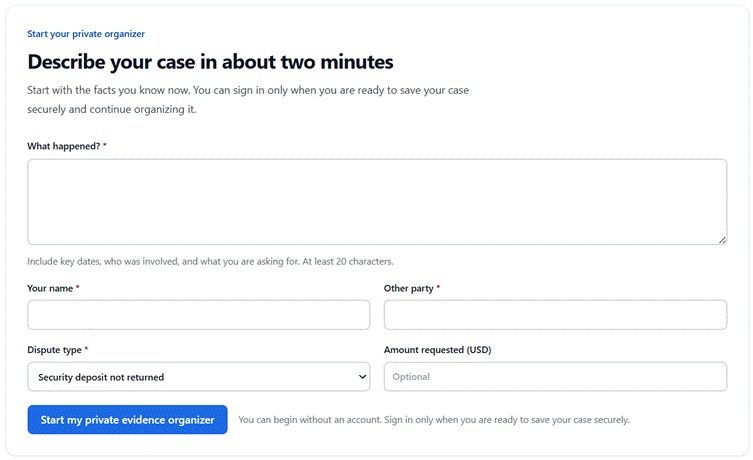
If the dispute continues, ClaimResolver helps organize the contract, invoice, delivery records, communications, and other small claims evidence into a factual case record. You can describe your case in about two minutes and start without creating an account, so there's no reason to wait until the week before your hearing. ClaimResolver helps users organize the small claims evidence behind the dispute, including documents, messages, photographs, payment records, and a chronological account of what happened — turning the waiting period into useful prep time instead of a stressful scramble at the end.
Hearing Day: Usually Over in Minutes
Small claims hearings are short. Judges typically give each side just a few minutes to present their case, and many rule on the spot or mail a decision within a few weeks. Bring copies of everything — most courts want a set for the judge, and the other party may be entitled to see it too.
After a Ruling: Collecting What You're Owed
Winning the case and actually collecting the money are two different steps. If the other party doesn't pay voluntarily, you may need to pursue additional collection steps, like wage garnishment or a bank levy, which vary by state and can add more time. This is worth knowing going in, so it doesn't come as a surprise after a ruling in your favor.
The Bottom Line
A small claims case, from the beginning to the end, may only last for a couple of weeks (if the demand letter is effective) and as much as several months, if you end up having a hearing. What you control most is how quickly you begin documenting and cataloging; in almost every case, the claimant who immediately starts pulling things and looking for evidence will move faster and with less anxiety than a claimant who is served with an order to appear at a hearing in court.