



How Landlords Can Verify Fire Door Certifications Before Installing or Replacing One
A certificate is only useful if it matches the door in front of you. Landlords often see impressive looking labels, test reports, and certificates when a fire door is quoted, and it is easy to assume the paperwork settles the question. The real question is simpler and easier to miss. Does that evidence actually apply to the door being installed in your building?
Going into 2027, fire safety enforcement around rented and multi-occupancy buildings has only gotten stricter, and landlords are more likely than before to be asked for proof rather than a verbal assurance. That makes it worth treating certification checks as a standard part of any door installation or replacement, not an extra step reserved for larger commercial projects.
Start by comparing the quotation, the product data sheet, and the certificate side by side. Look for a matching model or series reference, construction description, rating, size range, glazing detail, frame type, and hardware listed on each document. If a supplier is offering UL certified fire doors, ask which specific configurations within that certified range apply to your property, since one certificate rarely covers every size or variation a supplier sells.
Read the Test Report as a Scope Document, Not a Rating
A fire test report or classification document usually contains far more than a time rating like thirty or sixty minutes. It describes the exact specimen that was tested, including the leaf and frame construction, hardware, glazing, wall type, and orientation used during the test.
Those details matter because they define the conditions the result actually covers. If your door will be a different size, use different glazing, or sit in a different wall type than the tested specimen, that difference needs to be checked before you trust the certificate to apply.
Check What a UL Listing Actually Covers
When a product is marketed with UL certification, ask three direct questions. What company or entity holds the listing? What exact product or assembly does that listing describe? Does the door, frame, glazing, and hardware you are being offered fall inside that listed scope?
A brochure that simply says fire rated door is not proof of a project specific match. Sales teams sometimes use names that do not match the identifiers printed on the formal certificate, and any mismatch like that should be resolved on paper rather than explained over a phone call. Landlords sourcing doors from this supplier should ask for the certificate to be matched against the exact door model being quoted, not the supplier's general catalog.
Understand CE and EN Documentation if It Shows Up
Some suppliers present European style documentation using CE marking or EN classification numbers. This paperwork uses its own structure, and it identifies a manufacturer, a product family, and a declared scope rather than a single blanket approval.
A CE or EN document can still be useful evidence, but it does not automatically satisfy every certification requirement in every country. If your property falls under UL based standards, ask the supplier to show the UL specific evidence rather than accepting European paperwork as an automatic substitute.
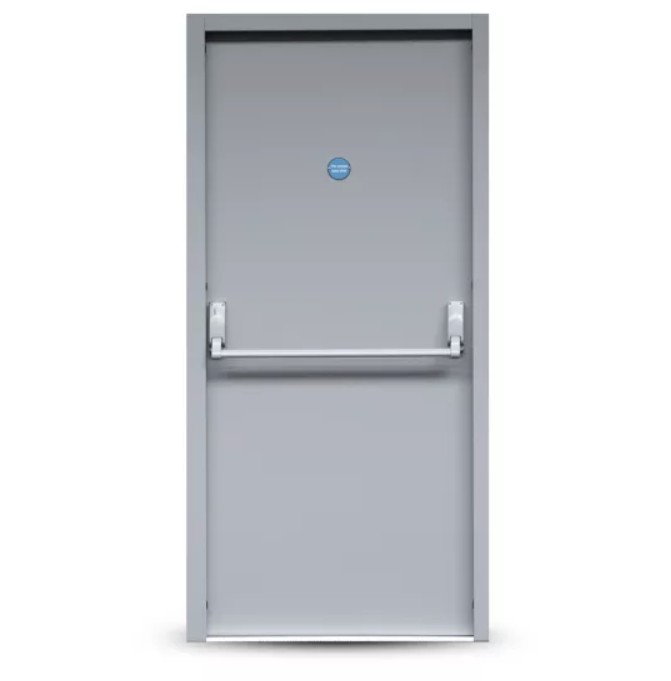
Match the Certificate to the Physical Door, Not Just the Paperwork
The most useful review is not collecting more certificates. It is placing the certificate next to the actual door you plan to install and checking that they describe the same thing.
Compare the leaf thickness, frame profile, fire rating, glazing arrangement, seals, hinges, and any lock or exit hardware fitted to the door. Any hardware substitution, added vision panel, or different wall type can break the connection between the certificate and the installed door.
Keep Records a Fire Inspector Can Actually Follow
Fire safety inspectors and insurers may ask for proof at any time, so a landlord benefits from keeping an organized file rather than a folder of unrelated certificates. Save the product data sheet, the specific certificate for the model installed, the installer's confirmation of correct fitting, and any label information printed on the door itself.
Record the certificate details for each door
Door location and the room or unit it protects
Manufacturer name and model or series reference
Fire rating and the standard it was tested against
Installer name and installation date
Certificate or listing reference number
Keep this file updated whenever a door is replaced
Date of replacement and reason for the change
New certificate matched to the new door
Confirmation the frame and hardware are compatible
Photo of the door label for future reference
Why This Matters More When You Are Replacing Rather Than Installing New
A brand new building project usually has an architect or contractor managing certification as part of the job. A landlord replacing a single damaged door after years of use does not always have that same oversight, which is exactly when a mismatched certificate slips through unnoticed.
Before paying for a replacement, ask the supplier directly whether the certificate you are being given matches the exact door, frame, and hardware combination being delivered. A specific answer in writing protects you far more than a general assurance that the door is fire rated.
It also helps to ask who actually installed the door and whether that installer can provide their own confirmation of fitting. A correctly certified door that is hung badly can still fail in a real fire, so the installation record matters almost as much as the manufacturing certificate. Keep both documents together rather than filing them separately.
The Strongest Fire Door File Is Not the Thickest One
A landlord does not need to collect every certificate a supplier has ever produced. The stronger approach is a short, accurate record that clearly ties one certificate to one door, states what was checked, and shows who confirmed it. That kind of record holds up during an inspection far better than a stack of paperwork that does not match what is actually installed.
It also helps to buy from manufacturers who make this kind of verification easy in the first place. YK Fire Door Industry is one example of a manufacturer that publishes clear product and certification information for its steel fire door range, which gives landlords a documented starting point instead of having to chase down scattered paperwork after the door is already installed.
Frequently Asked Questions
How do I know if my fire door is certified?
Look at the top or side edge of the door for a label or colored plug, then find the matching certificate from the manufacturer.
Do landlords legally need to check fire door certificates?
Yes. Fire safety regulations require landlords to keep fire doors in safe working order and produce evidence of that if asked.
What is the difference between UL and CE fire door certification?
UL comes from testing and listing standards used mainly in North America, while CE and EN follow European standards, so one does not automatically cover the other.
Can I install a fire door without a certificate?
You can, but there will be no proof the door performs as a fire door, and that can cost you at inspection time or with your insurer.
How often should landlords review fire door certification records?
Check the records any time a door goes in or gets replaced, then again whenever a routine fire safety inspection comes around.