



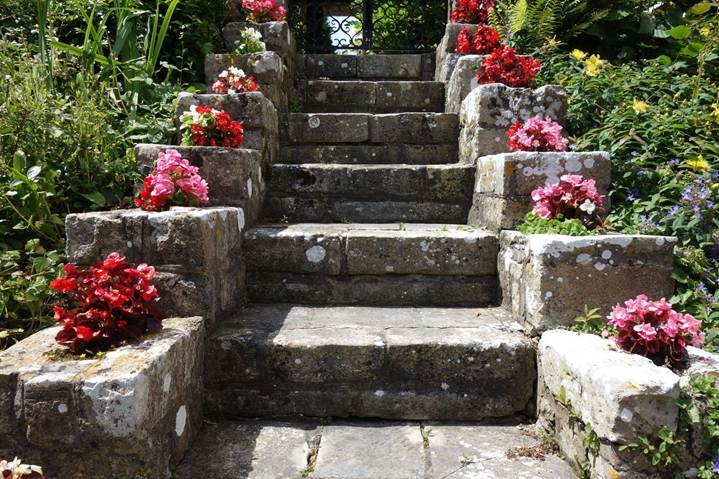
Stone steps are one of the few outdoor upgrades that a buyer walks on before setting foot inside the house. They solve a practical problem, moving people safely across a change in grade, and they set the tone for how the rest of the property reads. That double role is why homeowners keep asking whether the investment shows up at resale. This guide breaks down where the value comes from, how stone compares to other step materials, and which design and installation choices protect the return.
How Do Stone Steps Increase Home Value?
Stone steps add value through 2 distinct channels. The first is functional: a safe, code-compliant transition between a driveway, walkway, patio, or sloped section of the yard removes a defect that buyers and inspectors notice immediately. The second is perceptual: a durable stone entrance signals that the property has been built and maintained to a higher standard.
Appraisers rarely assign a line item to steps on their own. They assess the entrance as part of overall site improvements and condition, so steps that are level, clean, and visually consistent with the home lift the whole assessment. Crumbling or improvised steps do the opposite and often trigger a repair request during negotiation.
Because the entrance absorbs the most foot traffic and the harshest weather on the property, the material spec is what decides whether that value holds. Manufacturers like Techo-Bloc produce stone steps in dense, factory-finished formats made for freeze-thaw climates, so the treads keep their colour and edge definition through years of snow and de-icing salt. For a homeowner, that means the entrance still presents well on the day the property goes on the market.
Curb Appeal and First Impressions at the Entrance
Curb appeal is the buyer's first data point, and it forms in seconds. The front entrance carries more of that weight than any other exterior element because it's the path every visitor physically uses. Stone steps read as permanent construction rather than a temporary fix, which is why they anchor a front yard visually.
Colour, texture, and format also matter here. Steps that echo the tones of the facade, the walkway, and the driveway create a unified approach, while mismatched materials make an entrance look patched together over time.
What Return Can You Expect From a Hardscape Upgrade?
Returns on hardscaping depend on the local market, the condition of the existing entrance, and the quality of the installation. Replacing steps that are cracked, settling, or unsafe usually delivers the strongest payback because it removes a visible defect. Adding steps to an otherwise sound entrance returns less directly, though it still supports faster sale timelines by improving presentation.
The most reliable way to estimate the return is to compare recent sales in your area and ask a local real estate agent how entrances are being valued in your neighbourhood.
Stone Steps Versus Other Step Materials
Material choice determines how long the steps last, how much maintenance they need, and how they present at resale. The 3 comparisons below cover the options most homeowners weigh.
How Do Stone Steps Compare to Poured Concrete Steps?
Poured concrete goes in as a single monolithic unit, so when it cracks or settles, the repair usually means demolishing and repouring the whole section. Stone steps are modular, which means a damaged unit can be lifted and replaced without disturbing the rest of the structure.
Concrete also spalls when de-icing salts and freeze-thaw cycles work on the surface, leaving a pitted grey finish that ages the entrance. Manufactured stone steps are produced under controlled conditions with denser surfaces and colour running through the unit, so wear is far less visible.
How Do Stone Steps Compare to Wood and Timber Steps?
Wood steps cost less up front and go in quickly, which makes them common on decks and temporary grade transitions. They also rot, warp, and loosen at the fasteners, so they need staining, board replacement, and periodic rebuilding.
Buyers read wood steps as a maintenance item and stone steps as an improvement. That difference in perception is what shows up in an offer.
Which Step Materials Hold Their Value in Freeze-Thaw Climates?
In climates with repeated freeze-thaw cycles, water absorption is the variable that decides longevity. Materials that absorb water expand when it freezes, which causes surface flaking, cracking, and eventual structural failure.
Dense manufactured stone with low absorption rates performs best in these conditions, especially when it sits on a properly compacted granular base with drainage. Natural stone can perform well too, though quality varies significantly by quarry and by how the pieces are cut and set.
Which Design Choices Make Stone Steps Add the Most Value?
The same product can add or subtract value depending on how it's specified and where it goes. 3 decisions carry most of the weight.
Placement: Front Entrance, Sloped Yards, and Pool Decks
Front entrance steps deliver the highest visibility return because they're part of the first impression and the daily path of use. Steps on a sloped yard convert an awkward, hard-to-use grade into usable outdoor space, which expands the functional footprint of the property.
Around a pool deck, steps do double duty as circulation and as a safety feature, so slip resistance and consistent riser heights become the priority.
Why Do Step Dimensions and Safety Codes Matter?
Inconsistent riser heights are the leading cause of trips on outdoor stairs, and they're one of the first things a home inspector flags. Local building codes set minimum tread depths, maximum riser heights, and railing requirements above a certain number of risers.
Steps that fall outside code can force a costly correction during a sale. Confirming dimensions and railing rules with your municipality before construction protects both safety and resale.
Integrating Steps With Patios, Walkways, and Retaining Walls
Steps that share a colour family and format with the surrounding hardscape read as a designed system rather than a standalone addition. Continuing the same stone from the walkway into the steps and up to the landing creates visual flow and makes a small entrance feel larger.
When steps cut through a slope, tying them into a retaining wall in the same collection holds the grade and finishes the transition cleanly.
What Should You Budget for Stone Steps?
Budget planning for stone steps involves more than the price of the units themselves. Site conditions often drive a larger share of the total than the material.
Cost Factors: Material, Site Preparation, and Installation
The main cost drivers are the stone product and format, the number of risers, excavation and base preparation, drainage work, and any railing required by code. Difficult access, poor soil, or removal of an existing concrete structure raises the site preparation portion significantly.
Premium manufactured stone carries a higher material cost than poured concrete or wood, and it delivers a longer service life with less maintenance over the years the homeowner keeps the property. Requesting itemized quotes from 2 or 3 contractors is the clearest way to understand where the money is going.
Why Does Certified Installation Protect Resale Value?
Most step failures trace back to the base, not the stone. Insufficient compaction, a base that's too shallow, or missing drainage lets water collect and move the structure through the first few winters.
Certified installers follow manufacturer specifications for base depth, compaction, and drainage, and their work is typically backed by both a product warranty and a workmanship guarantee. Transferable documentation of that work is a concrete asset when a buyer asks about the age and condition of the entrance.
Maintaining Stone Steps Over Time
Maintenance is where the long-term value of stone shows up, since a low-effort surface stays presentable through years of use.
What Maintenance Do Stone Steps Require?
Routine care comes down to sweeping debris, rinsing the surface, and cleaning organic staining from leaves or moss as it appears. Joint material between units should be topped up when it settles, which keeps the treads stable and blocks weed growth.
Some manufactured stone comes with factory-applied surface protection that resists oil and organic stains, which reduces the need for aftermarket sealing. For unsealed natural stone, a breathable sealer applied on the manufacturer's schedule limits absorption and staining.
When Should Stone Steps Be Repaired or Replaced?
Repair is the right call when a single unit is chipped, stained, or has shifted while the rest of the structure remains level and stable. Because the system is modular, that unit can usually be reset or swapped without touching its neighbours.
Full replacement becomes necessary when the base has failed, which shows up as multiple settling steps, separating joints, or water pooling on the treads. Rebuilding the base at that point is the only fix that lasts.
What to Remember About Stone Steps and Home Value
Stone steps add value when they correct a real access problem, meet code, and match the rest of the property visually. The material choice protects that value over time, since dense stone resists the freeze-thaw damage and surface wear that make concrete and wood look tired. Installation quality decides whether the steps still look new in 10 years, so the base and the installer matter as much as the product on top. Treated as part of a complete entrance rather than an isolated repair, stone steps support both curb appeal and the price a buyer is willing to pay.
Frequently Asked Questions About Stone Steps and Home Value
Do Stone Steps Increase a Property Appraisal?
Appraisers evaluate site improvements as a group rather than pricing steps individually. Stone steps in good condition support a stronger assessment of the property's exterior, while damaged or unsafe steps can be recorded as a required repair.
How Long Do Outdoor Stone Steps Last?
Service life depends on the material's density and the quality of the base beneath it. Properly installed manufactured stone steps last for decades with routine cleaning, and many premium products carry long-term or lifetime transferable warranties.
Are Stone Steps Worth It for a Small Front Yard?
Yes, and small entrances often benefit the most. A short run of stone steps that continues the same material as the walkway makes a compact approach look intentional and larger than it is.
Do Outdoor Stone Steps Require a Permit?
Requirements vary by municipality and usually depend on the height of the grade change and whether a railing or structural wall is involved. Check with your local building department before starting, since work done without a required permit can complicate a future sale.