



Why Rental Property Investors Need Professional Advisory Services in 2026
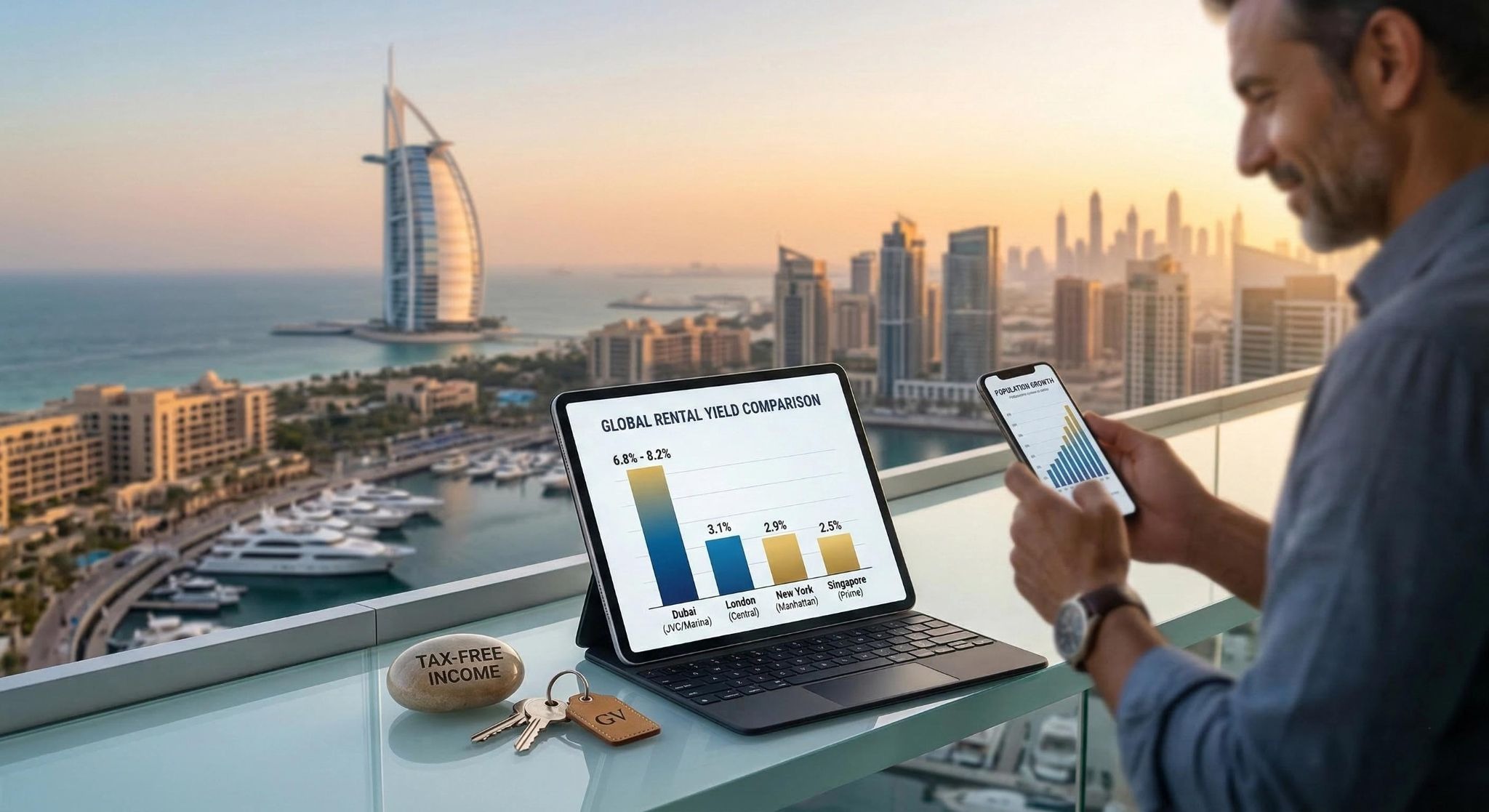
Dubai has quietly become one of the most rewarding rental markets on the planet — and one of the most competitive. The first half of 2026 alone recorded roughly AED 286 billion in property sales across some 86,000 transactions, the second-strongest opening half in the emirate's history. Gross rental yields in well-chosen communities still run between 6% and 9%, comfortably ahead of London, Singapore or New York. It is no surprise that a growing number of overseas buyers now want to invest in Dubai real estate for income rather than lifestyle.
But volume brings noise. With thousands of listings for property for sale in Dubai, more than 100 active developers and rental rules that changed meaningfully this year, the gap between a good purchase and an average one has widened. That is precisely why experienced investors lean on professional real estate advisory services before they sign anything. An adviser's job is not to sell you a unit — it is to help you understand what that unit will actually earn, and what it will actually cost to own.
Dubai Property Investment in 2026: A More Selective Market
The market has shifted from momentum-driven to quality-driven. Prices are still rising — the citywide average reached roughly AED 1,759 per square foot in Q1 2026, up around 12% year-on-year — but that growth is no longer evenly spread. Two apartments in the same district, sometimes in the same tower, can deliver very different net returns once service charges, chiller fees and void periods are counted.
This is where beginners stumble. Advertised "guaranteed" yields are usually gross figures. A 8% gross return on an apartment with high service charges and a six-week annual vacancy can land closer to 5% net. A good real estate consultant in Dubai models the full picture: purchase price, 4% DLD transfer fee, agency commission, annual maintenance, expected occupancy and realistic rent based on registered contracts rather than optimistic listings.
The Smart Rental Index Has Changed the Rules for Landlords
Anyone planning to buy property in Dubai as a rental asset needs to understand the Dubai Land Department's Smart Rental Index. Rolled out in its current form in 2025 and refined again in early 2026, it rates individual buildings on a one-to-five star scale using age, build quality, facilities and maintenance — and that rating feeds directly into how much rent you can legally charge on renewal.
Permitted increases follow the slabs set by Decree No. 43 of 2013: no increase if your rent sits within 10% of the index benchmark, rising in steps to a maximum of 20% where rent is more than 40% below market. The 2026 update also tracks sub-communities separately and splits furnished from unfurnished stock, which makes benchmarking far more precise in large districts like JVC or Dubai Marina.
Two practical consequences follow. First, building quality is now a yield variable, not just a comfort factor. Second, process matters: landlords must serve 90 days' written notice before changing rent at renewal. Miss that window and the lease rolls forward on existing terms — one of the most common and most avoidable income leaks in the market.
Off-Plan Properties Dubai: Higher Upside, Higher Complexity
Off-plan continues to dominate, accounting for roughly 70% of residential transactions in early 2026. The appeal is obvious: staged payment plans, lower entry prices and the chance to hold an asset that appreciates before handover. But off-plan is also where inexperienced buyers carry the most risk — handover delays, specification changes, and communities that mature far slower than the marketing suggested.
Sensible due diligence includes checking that the project is registered with the DLD, confirming payments go into the escrow account rather than a developer's own account, reviewing the developer's actual delivery record, and stress-testing the handover-year rental assumptions against genuine comparable supply. Advisers do this routinely. Most first-time buyers do not know it needs doing.
Finding the Best Places to Buy Property in Dubai for Rental Income
There is no single answer, and anyone who gives you one is selling. Established mid-market communities tend to produce the strongest yields and the deepest tenant pool, while prime waterfront addresses and luxury villas in Dubai typically deliver lower yields but stronger capital appreciation and easier resale. Emerging districts sit in between: cheaper entry, higher yield on paper, but more sensitive to new supply.
The right choice depends on your objective. Income now? Capital growth over seven years? A residency visa alongside a return? Matching the strategy to the asset — before you fall in love with a show apartment — is the single highest-value step in the process.
A Simple Framework for First-Time Investors
Define the goal — target net yield, holding period and exit plan, written down.
Set a true budget — purchase price plus roughly 6–8% in transaction costs and furnishing.
Shortlist by data — compare registered transaction prices and index rents, not listing prices.
Verify everything — developer track record, escrow registration, service charge history, Ejari status.
Plan the management — tenant sourcing, renewals, notice periods and maintenance from day one.
Working With People Who Are Accountable to You
Not all real estate agents in Dubai work the same way. Brokers are paid on transactions; advisers are judged on outcomes. Look for RERA-licensed professionals who will show you the numbers behind a recommendation, discuss the downside as openly as the upside, and remain available after the keys are handed over.
That is the standard Professor Property was built around — a DLD-licensed advisory guiding first-time buyers and international investors through every stage of Dubai property investment, from shortlisting to registration and beyond.
If you are considering your first rental purchase in Dubai, start with an honest conversation rather than a listing. Visit Professor Property to book a consultation and get a clear, data-backed view of what your investment can realistically deliver in 2026.