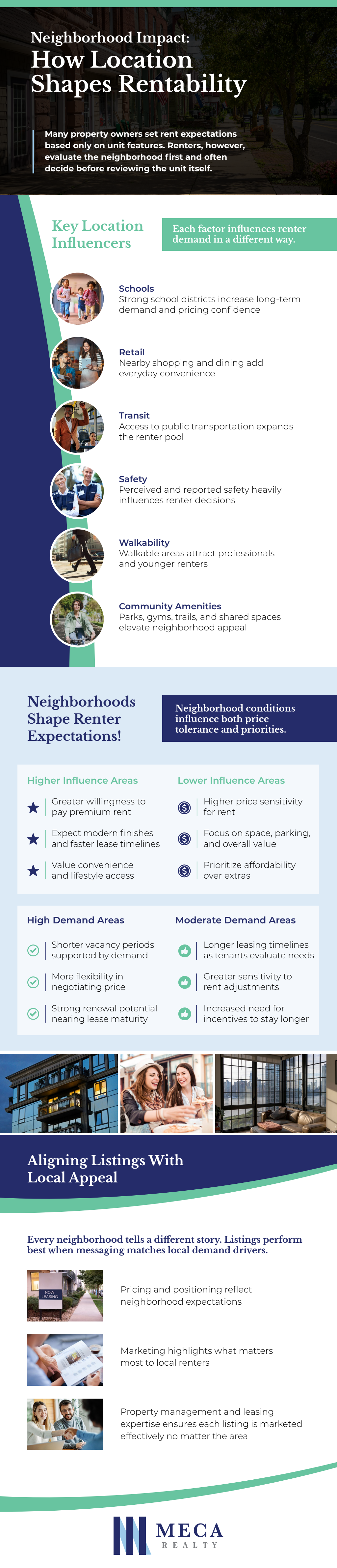



Location remains one of the strongest influences on how quickly a property rents and how satisfied tenants feel after moving in. Renters often compare neighborhoods, commute times, nearby services, and local safety before focusing on unit details. Even a well-maintained property may struggle if the surrounding area does not match renters' expectations.
Access to Everyday Needs Matters
Many renters want convenient access to grocery stores, schools, parks, restaurants, and healthcare facilities. Areas with nearby services often attract stronger rental demand because tenants value shorter travel times during busy workweeks.
Walkability also affects rentability in many cities. Sidewalks, bike paths, and public transportation access may increase interest from renters who prefer alternatives to long commutes.
Families often focus heavily on school districts and neighborhood recreation options, while younger professionals may prioritize entertainment and nightlife access. Local convenience plays a major role in long-term tenant satisfaction.
Job Markets Influence Demand
Employment opportunities directly affect rental performance in many regions. Properties near hospitals, universities, business districts, and industrial centers often maintain steadier occupancy because renters want easier access to work. Growing job markets may also increase rental demand as more people relocate for employment opportunities.
Remote work has changed some renter priorities as well. Many tenants now look for neighborhoods offering larger living spaces, quieter surroundings, and reliable internet access. Property managers who monitor local hiring trends and economic growth may identify stronger rental opportunities earlier.
Neighborhood Reputation Impacts Tenant Decisions
Neighborhood image affects how renters view a property before they even schedule a tour. Clean streets, maintained landscaping, low crime rates, and visible community investment often improve rental appeal. Online reviews, local social media discussions, and public safety reports also shape renters' opinions quickly.
Properties located in stable neighborhoods may experience fewer vacancy problems and stronger tenant retention over time. Professionals involved in residential property management frequently monitor neighborhood conditions because changes in the surrounding area may directly affect rental performance and pricing strategies.
Transportation and Parking Add Value
Transportation access remains important in both urban and suburban markets. Properties located near major roads, train stations, bus routes, or public transit systems often attract renters looking for more flexible commuting options. Parking availability also influences rental decisions, especially in crowded cities or dense residential areas.
Even small location details, such as traffic patterns or proximity to highways, may affect how attractive a property feels to potential tenants. Convenient transportation options often improve daily living conditions for renters.
Future Development Can Affect Rentability
Neighborhoods change over time, and future development projects may influence long-term rental demand. New shopping centers, schools, public transportation projects, and business developments may increase property appeal in growing areas. On the other hand, rising congestion or declining infrastructure may reduce renter interest in some locations.
Location continues to shape nearly every part of rental performance, from tenant demand to lease renewal rates. Access to services, transportation, employment centers, and neighborhood quality all influence how renters evaluate a property. For more information on how location shapes rentability, feel free to look over the infographic below.
Infographic Embed Code: