



A rug can look perfectly sized in a showroom and feel completely different once it is placed under your furniture. The problem is rarely the rug alone. It usually comes down to how much floor space you have, where the furniture sits, and what you want the room to feel like.
As a home decorator, I would consider a 5 x 7 rug a useful option for rooms where you want to define a space without covering most of the floor. It offers enough coverage to anchor a small seating arrangement, sit beside a bed, or give a home office a more finished look. The key is choosing a room where its proportions make sense.
Smaller Living Rooms Benefit From a Well-Placed Rug
In a compact living room, a rug should bring the furniture together without making the floor feel crowded. A 5 x 7 can work well when the room has a small sofa, an armchair, and a coffee table rather than a large sectional with several extra seats.
Picture a two-seater sofa facing a single accent chair, with a coffee table between them. Placing the rug beneath the table and extending it toward the seating creates a shared area for the furniture. The arrangement feels intentional, even if the rest of the room has exposed flooring.
Placement matters more than covering every inch. Ideally, the front legs of the sofa and chair should rest on the rug, provided the furniture is arranged closely enough. This creates a visual connection between the pieces instead of leaving the rug floating in the middle of the room.
However, a small rug can look out of place beneath a large sectional that stretches across two walls. If the sofa extends well beyond the rug on every side, the furniture can appear disconnected. In that situation, a larger option may provide better balance.
Apartment Seating Areas Need Clear Boundaries
Apartments often combine the living room, dining area, and kitchen within one open space. A rug can help separate the seating area without adding a divider or taking up valuable floor space.
For example, you might have a compact sofa against one wall, a chair near the window, and a small coffee table in front. A 5 x 7 rug can mark this as the main sitting area, giving the furniture a shared visual base while leaving the walkway to the kitchen clear.
The same approach works in a studio apartment. Positioning the rug beneath the seating arrangement helps distinguish the lounge from the sleeping area, particularly when both spaces share the same flooring.
When choosing 5 x 7 rugs for an apartment, consider the paths you use every day. You should be able to walk between the sofa, kitchen, and entryway without constantly stepping around a rug corner or squeezing past furniture. A slightly smaller rug that fits the layout comfortably can work better than a larger one that interrupts movement.
How to Get the Size Right in a Living Room
The living room is often the easiest place to notice whether a rug is appropriately sized. Every major piece of furniture contributes to the overall balance, so the rug needs to relate to the entire seating arrangement rather than just the coffee table.
For a small living room, a 5 x 7 rug can sit beneath the coffee table with the front legs of the sofa and nearby chairs resting on its edges. This arrangement helps the seating feel connected without requiring the rug to extend all the way beneath the furniture.
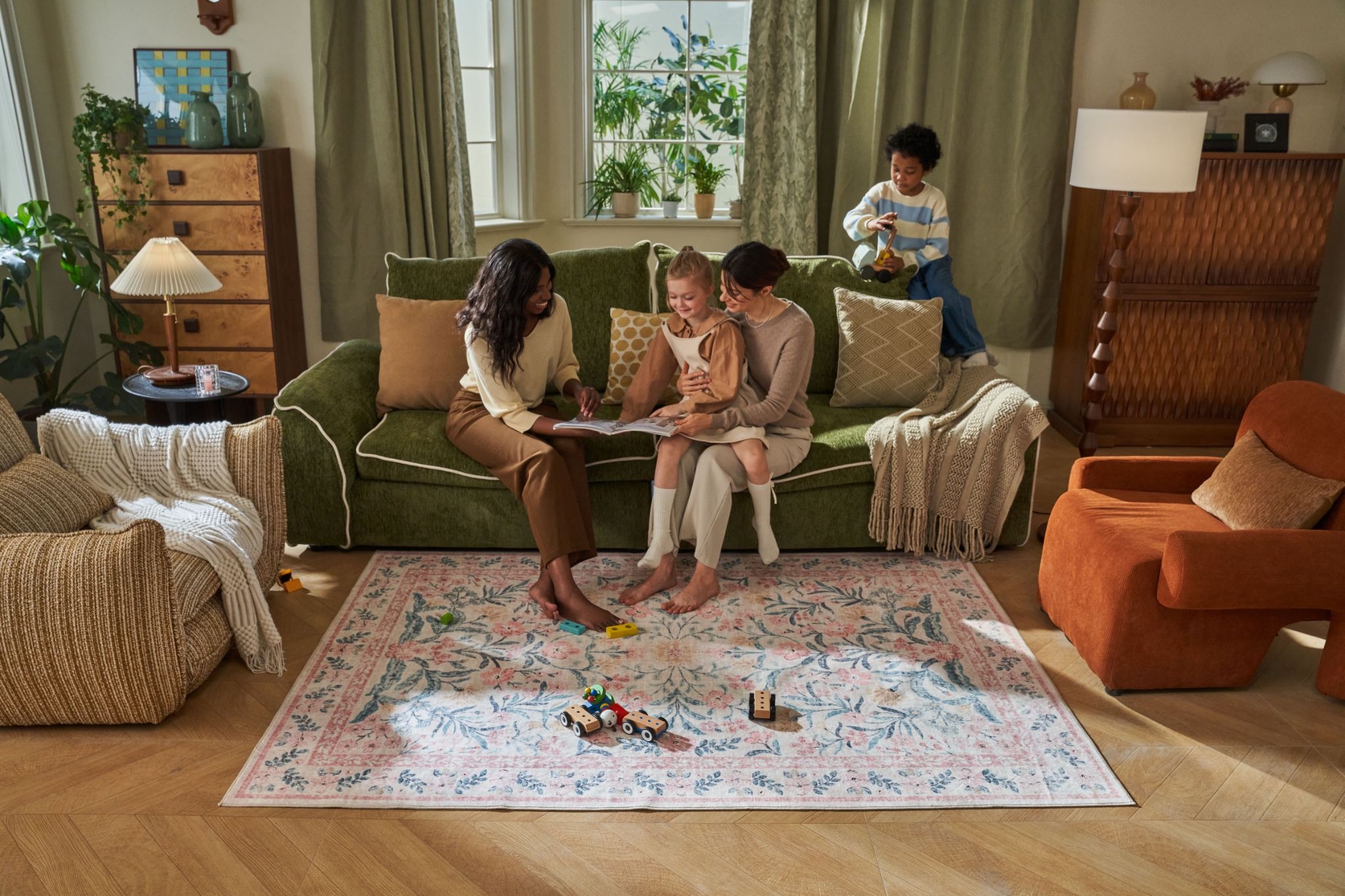
When you’re shopping for living room rugs, you should think about the shape of your seating area first. A compact rectangular arrangement usually suits a rectangular rug, especially when the sofa faces an armchair or a pair of smaller seats. Leave enough visible flooring around the rug to create a comfortable border, but avoid leaving so much space that the rug looks like an isolated mat.
Furniture size also makes a difference. A loveseat and two slim chairs can sit comfortably around a medium-sized rug, while a deep sectional, oversized recliners, or a long sofa paired with several chairs may need more coverage.
One practical test is to mark the proposed rug area with painter's tape before buying. Place the tape where the rug's edges would fall, then look at the arrangement from the doorway and while seated on the sofa. You will quickly see whether the rug connects the furniture or looks too small for the space.
Bedrooms Where a Medium Rug Makes Sense
A 5 x 7 rug can work nicely in a bedroom, particularly when the bed is not oversized and there is enough open floor space beside it.
One option is to position the rug beneath the lower portion of the bed so that it extends beyond the foot and sides. This gives you a softer surface to step onto in the morning and adds some visual warmth to the room. The exact placement depends on the bed size and the available floor space.
In a guest bedroom with a double bed, a compact bedside table, and a narrow chest of drawers, this arrangement can look balanced. The rug adds comfort without competing with the other furnishings.
For a king-size bed, however, a 5 x 7 rug may provide limited coverage, especially if you want a substantial area of rug visible on both sides. It can still work as an accent beneath the foot of the bed, but it may not deliver the full, layered look you would get from a larger rug.
Also, check the position of your bedroom doors and drawers. A rug should not prevent a door from opening fully or create a raised edge directly in a frequently used walking path.
A Home Office Can Feel More Comfortable With a Rug
Home offices rarely need wall-to-wall floor coverage. In a small workspace, a 5 x 7 rug can define the desk area and soften the room, particularly if the office also serves as a guest room or part of a bedroom.
A desk positioned against a wall, a comfortable chair, and a small bookcase can form a neat arrangement around a medium-sized rug. The rug makes the workspace feel separate from the rest of the room, even when there is no physical divider.
There is one detail worth checking before you settle on the placement: the office chair. If you use a rolling chair, a thick or uneven rug can make movement difficult. Choose a relatively low-pile surface and use a suitable chair mat if needed. Make sure the rug stays flat rather than bunching beneath the wheels.
For a fixed reading chair or a small writing desk with a stationary chair, the arrangement is simpler. The rug can sit beneath the furniture and leave the surrounding floor open.
Reading Corners and Compact Sitting Areas
A spare corner does not need much furniture to feel complete. A reading chair, a floor lamp, and a small side table can create a comfortable place to sit, but the arrangement may look unfinished if everything stands separately on a large, bare floor.
A 5 x 7 rug gives these pieces a shared footprint. It offers enough room to accommodate a chair and table while leaving space for a footstool or a small basket of books. In a wider corner beside a window, it can also help distinguish the reading area from the main living space.
You do not have to fill the entire rug with furniture. Leaving some visible surface around the chair can make the arrangement feel relaxed rather than crowded. The important thing is that the rug relates to the seating area, not that every edge lines up with a furniture leg.
The same idea works in a compact sitting room, a quiet corner of a bedroom, or a small conversation area near a fireplace. Just check that the rug does not extend into a walkway where people are likely to catch its edges.
When a 5 x 7 Rug Looks Too Small
A medium rug works best when it has a clear purpose. Problems arise when the furniture arrangement is too large for the area the rug covers.
In a spacious living room, for example, placing a 5 x 7 rug beneath only a coffee table can leave a wide gap between the rug and the surrounding sofas and chairs. The result may look less like a connected seating area and more like a decorative rectangle on the floor.
The same issue can occur in a large bedroom, beneath a king-size bed, or in a dining area where chairs need enough room to remain on the rug when pulled away from the table.
Room size alone does not determine the right choice. A relatively large room can still accommodate a 5 x 7 rug if it contains a small, separate seating arrangement. Likewise, a modest room may need a larger rug if it has a deep sectional and several chairs.
Think about the furniture you want to group together, the walking space you need to preserve, and the amount of floor you want to leave visible. These details will tell you more than the room's square footage by itself.
Choose a Rug That Fits the Way You Live
A 5 x 7 rug is most useful in a room with a defined purpose and a manageable furniture arrangement. It can anchor a small living room, separate an apartment's seating area, soften a bedroom, or make a home office feel more settled.
Before choosing one, consider what needs to sit on the rug and how people move around the room. If the furniture fits comfortably within its footprint and the surrounding floor remains easy to navigate, the size is probably a good match. If the main furniture extends far beyond the edges, look at a larger option instead.
A rug should make the room feel more connected, not force the furniture into an awkward arrangement. When the proportions work, even a simple seating area can feel thoughtfully put together.