



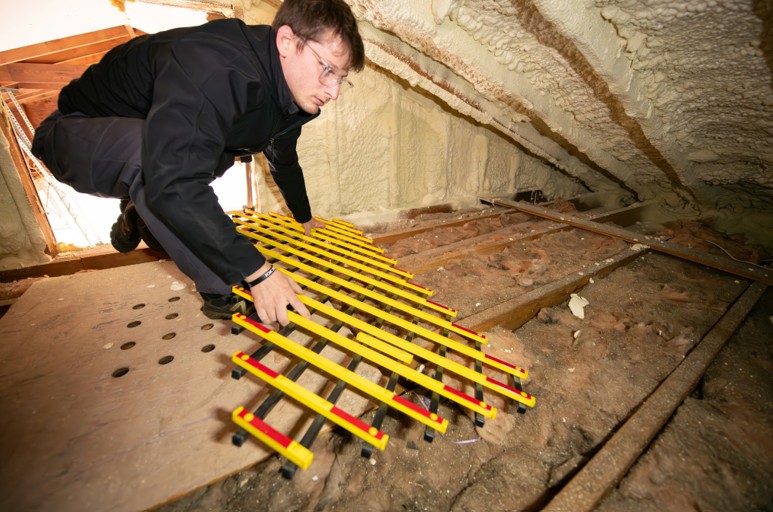
Rodents can damage attic insulation long before homeowners notice scratching sounds, unpleasant odors, or visible droppings. Mice, rats, squirrels, raccoons, and other pests may tunnel through insulation, flatten it, build nests, and leave urine or waste behind.
A few isolated signs do not always mean the entire attic must be emptied. The right response depends on how widespread the activity is, how long it has been happening, whether moisture is present, and whether the affected insulation can be cleaned safely.
How Pests Affect Insulation Performance
Insulation works best when it remains evenly distributed and maintains the correct depth. Rodents create pathways, nests, and compressed areas that reduce coverage and allow more heat to escape through the ceiling.
Pest activity may also affect materials around the insulation. Animals can chew electrical wiring, damage ductwork, block vents, tear vapor barriers, and disturb recessed lighting covers. For that reason, the entire attic should be inspected rather than focusing only on the visible insulation.
Common warning signs include:
●Droppings or urine stains
- Shredded insulation and nesting material
- Strong or persistent odors
- Tunnels and flattened sections
- Dead animals or insect activity
- Damaged wiring, vents, or air ducts
●Noises coming from the attic at night
When Spot Cleaning May Be Enough
Limited contamination may sometimes be handled without removing all the insulation. This is more likely when the affected area is small, easy to reach, and clearly separated from the rest of the attic.
Rodent droppings should not be swept, brushed, or vacuumed with an ordinary household machine. Disturbing dry waste can release contaminated dust into the air. The area should be carefully dampened with a suitable disinfecting solution before waste is collected and placed in a sealed bag.
A proper spot-cleaning plan may include removing nesting material, disinfecting accessible surfaces, replacing the affected section of insulation, and checking nearby areas for hidden contamination. If staining, odor, or waste continues beyond the visible section, a more extensive inspection is necessary.
When Full Removal Becomes Necessary
Professional attic insulation removal is usually the more practical option when droppings, urine, nesting material, or dead pests are spread across a large part of the attic. Removal may also be needed when insulation is heavily compressed, wet, foul-smelling, or too contaminated to separate from the waste.
Insulation that has absorbed urine or moisture may continue to produce odor even after visible debris is removed. It can also make it difficult to inspect the ceiling surface, wiring, framing, and ventilation system underneath.
The active pest problem should be controlled before new insulation is installed. Otherwise, animals may return and damage the replacement material.
A complete remediation plan generally includes:
●Identifying the type of pest
- Finding and sealing entry points
- Removing animals and contaminated materials
- Inspecting wiring and structural components
- Cleaning and disinfecting exposed surfaces
- Correcting roof leaks or ventilation problems
●Installing new insulation after the attic is dry
What If Moisture or Mold Is Present?
Pest activity sometimes appears alongside roof leaks, condensation, blocked vents, or bathroom fans that release moist air into the attic. These conditions can make the contamination worse and may lead to fungal growth on wood, cardboard, or insulation.
When damp insulation cannot be dried or cleaned properly, it may need to be discarded. Professional mold removal should address both the visible growth and the source of moisture. Simply adding fresh insulation over the damaged material can hide the problem and allow it to continue.
Before approving replacement work, ask the contractor to document the affected areas, explain what will be removed, show where pests entered, and describe how the attic will be protected from another infestation.