



Why a Vent Hood Can Underperform After Installation: The Gap Between Rated CFM and Real Kitchen Performance
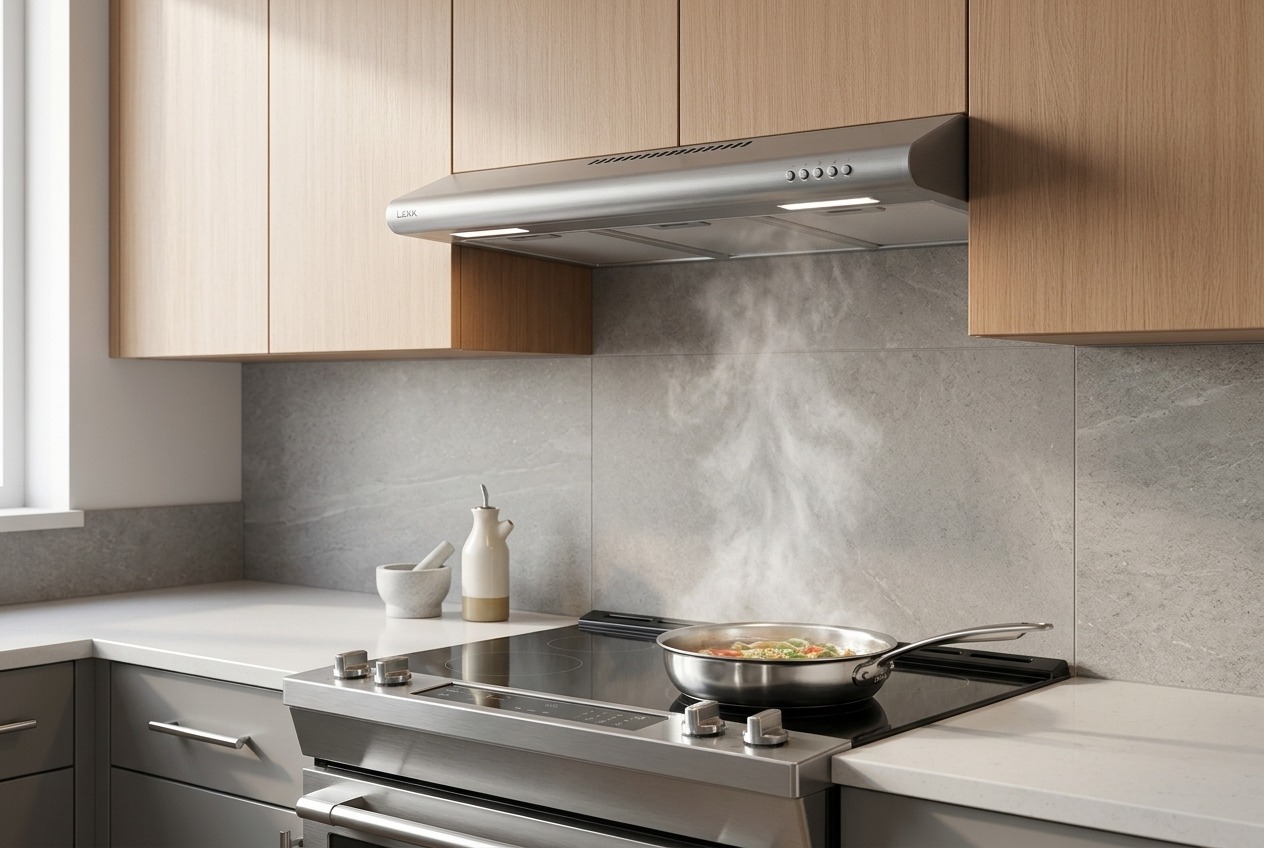
A newly installed vent hood should help remove cooking smoke, grease particles, moisture, and lingering odors. Yet some homeowners still find their kitchen smoky even after buying a model with an apparently sufficient airflow rating. When selecting a vent hood based primarily on its advertised CFM, it is easy to overlook the conditions that determine its actual performance.
The problem is not necessarily an inadequate fan. Duct dimensions, airflow resistance, mounting position, filters, and replacement air all influence the result. Understanding these differences helps explain why a seemingly powerful appliance can deliver disappointing results in an actual kitchen.
What a Vent Hood's Rated CFM Actually Measures
CFM, or cubic feet per minute, describes the volume of air a ventilation fan moves over time. In kitchen ventilation, this measurement helps indicate how much air a hood can exhaust. Manufacturers use CFM ratings to communicate a product's airflow capacity, allowing buyers to compare models. However, the number needs context because airflow measurements depend on testing conditions. A rating obtained under one pressure condition does not necessarily represent the airflow the same fan will deliver when connected to a particular duct system.
The distinction becomes clearer when considering a fan performance curve. This technical chart shows how airflow changes as the resistance a fan operates against increases. Static pressure represents part of that resistance, which can come from ductwork, bends, filters, dampers, and exterior outlets. As resistance rises, the operating airflow of many ventilation fans falls. Therefore, a hood advertised with a particular CFM rating should not automatically be expected to deliver that exact airflow after installation. The manufacturer's performance data and installation specifications provide a more meaningful basis for evaluation.
Why Installed Airflow Can Differ From the Advertised Rating
A vent hood operates as part of a complete ventilation system, not as an isolated fan. When the fan draws air through a duct, it encounters resistance along the route. The fan must work against this resistance to move air outside. If the duct is restrictive or the exhaust pathway contains several obstructions, the system's operating point can shift, reducing the airflow delivered compared with a rating measured under different conditions. This explains why two installations using the same hood model may not achieve identical results.
The following factors illustrate why the advertised figure and installed performance can differ.
Performance factor | Potential effect |
Rated CFM | Indicates airflow under specified test conditions |
Static pressure | Higher resistance can reduce delivered airflow |
Duct diameter | Undersized ducts can restrict airflow |
Duct length | Longer routes generally add resistance |
Duct bends | Additional turns can increase pressure losses |
Makeup air | Insufficient replacement air can affect exhaust operation |
A useful assessment therefore considers the fan's performance data alongside the actual duct configuration. Comparing the CFM figure alone cannot reveal whether the installed system is operating as intended.
Duct Design Problems That Restrict Vent Hood Performance
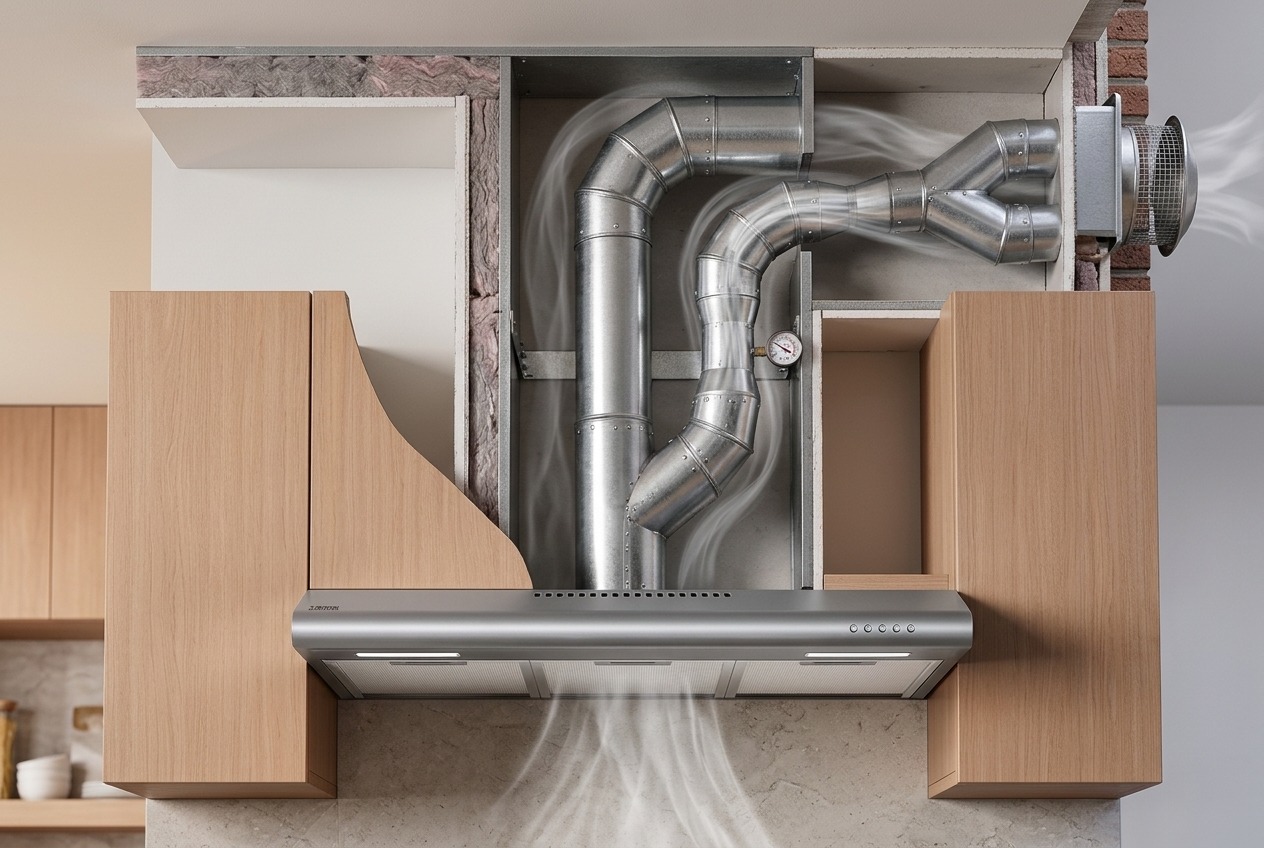
Ductwork is one of the most important parts of an exhaust installation. An undersized duct forces air through a smaller passage than the appliance may require, increasing resistance. Long duct runs can also add friction, while multiple elbows and abrupt transitions disrupt airflow. Flexible ducting with pronounced internal ridges can introduce further resistance compared with smooth metal ductwork. These issues don't affect every installation equally, but together they can make it harder for a fan to deliver its intended airflow.
The route to the exterior matters as well. A poorly selected wall cap, roof termination, obstructed outlet, or incorrectly fitted connection can interfere with exhaust movement. Manufacturers commonly recommend keeping duct routes as short and straight as practical and following the specified outlet dimensions. For example, Broan-NuTone installation guidance explains that long duct runs, elbows, and transitions can reduce hood performance. Homeowners should therefore have the existing duct route checked against the appliance manual before assuming the fan itself is defective.
Installation Position Can Affect Smoke and Odor Capture
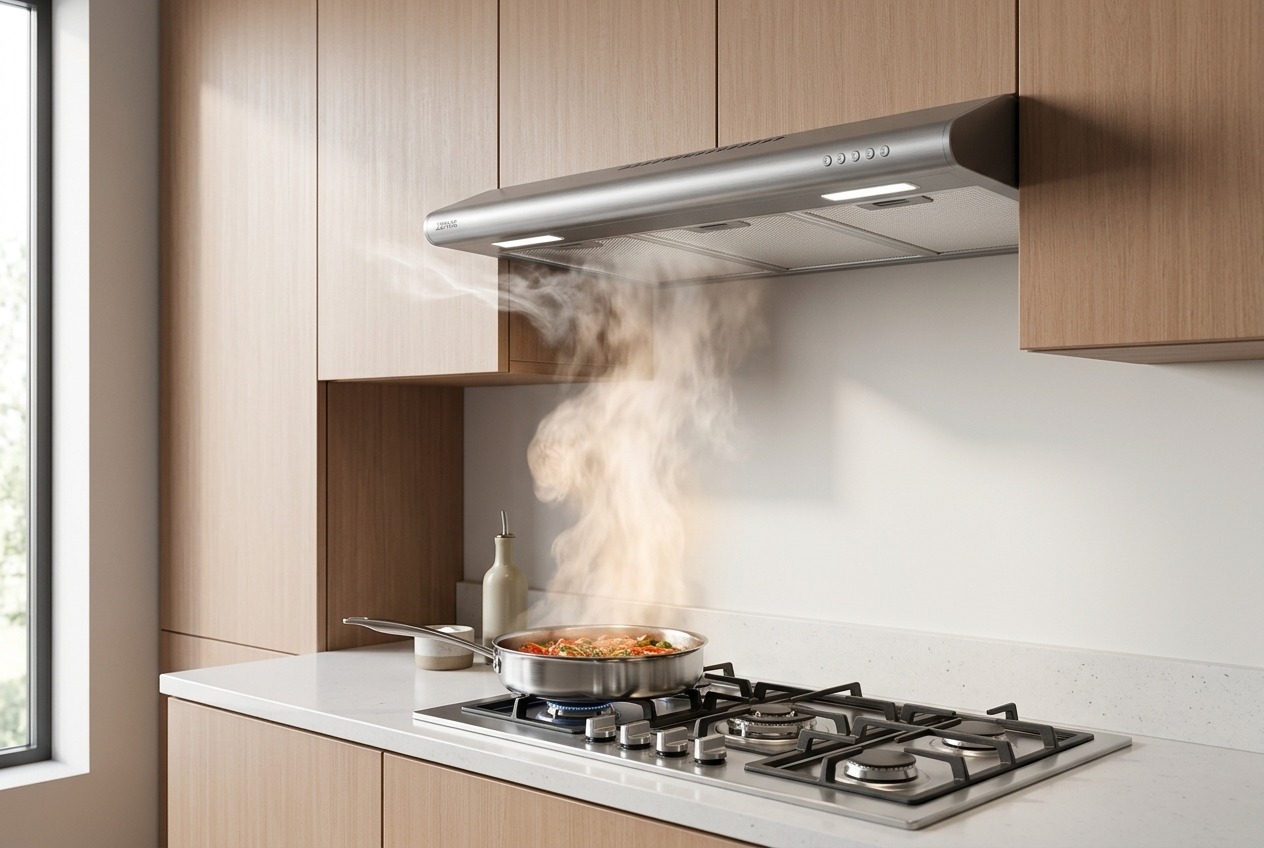
Airflow volume and capture effectiveness are related, but they are not interchangeable. Airflow describes how much air a fan moves, while capture effectiveness concerns how well the hood collects cooking emissions before they spread into the room. A hood may move a substantial volume of air but still allow smoke to escape if its capture area does not adequately cover the cooking surface. Hood width, mounting height, design, and position all influence how effectively rising cooking emissions enter the extraction area.
The surrounding kitchen environment can create additional challenges. Open windows, nearby doors, ceiling fans, and other ventilation equipment can produce cross-drafts that push rising smoke away from the hood. Different cooking appliances also have different ventilation considerations. For example, the ciarra nosh oven, a countertop steam oven with air-frying functionality, offers alternative cooking methods, but it does not replace an appropriately designed extraction system above a hob. CIARRA Appliances offers different kitchen appliance options, but ventilation planning should always consider the actual cooking equipment and its installation environment.
Filters, Dampers and Makeup Air Can Influence Performance
Filters help capture grease before cooking emissions enter the ventilation system, but accumulated grease can restrict airflow if maintenance is neglected. Clean metal grease filters according to the manufacturer's instructions and reinstall them correctly. Backdraft dampers also deserve attention. These components help prevent outside air from flowing backward through the exhaust duct when the fan is off. If a damper is obstructed, incorrectly fitted, or can't open properly, it can interfere with exhaust flow and reduce overall performance.
Makeup air is another consideration, particularly in tightly sealed homes. When an exhaust hood removes indoor air, replacement air must enter the building to maintain pressure balance. If the home cannot supply enough replacement air, negative pressure may develop and affect exhaust operation. The issue can become more noticeable when other exhaust appliances operate at the same time. However, not every kitchen requires a dedicated makeup-air system. The need depends on exhaust capacity, building characteristics, local regulations, and applicable installation requirements.
How to Identify Why a Newly Installed Vent Hood Is Underperforming
When a newly installed hood doesn't seem effective, homeowners should review the entire installation before considering replacement. Start by confirming whether the appliance operates in ducted or recirculating mode. A ducted hood exhausts air outside, whereas a recirculating model passes air through filters and returns it to the kitchen. Check that the filters are clean, correctly positioned, and suitable for the appliance. Also inspect the exterior outlet, where visible obstructions or a restricted termination may indicate a problem. These basic checks can help identify issues without dismantling the appliance.
Next, compare the installed ductwork with the manufacturer's requirements. Check the specified duct diameter, route, connections, and damper arrangement. Consider whether performance changes when other exhaust appliances operate, as this may indicate a pressure-balance problem. Persistent weak airflow, unusual noise, or poor smoke capture warrants assessment by a qualified ventilation professional. A professional can measure airflow using appropriate equipment rather than relying on subjective impressions. Do not modify electrical components, gas appliances, or concealed ductwork through improvised troubleshooting.
Why Increasing CFM Is Not Always the Right Solution
Replacing an underperforming hood with a higher-CFM model may seem like the easiest solution, but it does not necessarily address the underlying problem. If the existing duct is undersized, excessively long, or poorly routed, a more powerful fan may still encounter substantial resistance. The new appliance must also fit the available duct dimensions and installation arrangement. Without correcting these limitations, homeowners could spend more money without achieving the improvement they expected.
Higher airflow can also introduce other considerations, including operating noise, energy consumption, and the need for adequate replacement air. Select a ventilation system as a complete arrangement rather than by comparing maximum CFM figures in isolation. Before upgrading, it makes sense to investigate duct restrictions, hood positioning, filter condition, and pressure balance. Correcting an installation problem may be more effective than simply purchasing a fan with a higher advertised capacity.
Conclusion
A vent hood's advertised CFM rating is only one part of its performance story. The airflow delivered in a real kitchen depends on how effectively the fan works with the ductwork, exhaust outlet, filters, installation position, and available replacement air. Even a powerful appliance can underperform when these elements don't match or are installed incorrectly.
Rather than immediately replacing a hood with a higher-CFM model, homeowners should first identify where the ventilation system is losing effectiveness. Understanding these factors makes it easier to make informed decisions about kitchen ventilation. Explore CIARRA Appliances for further information on kitchen appliances and solutions.
FAQs
1. Why does my new vent hood have weak suction?
A new vent hood may have weak suction because of undersized ductwork, excessive duct length, multiple bends, obstructed filters, or a restricted exterior exhaust outlet. Incorrect installation and insufficient replacement air can also affect performance. Checking the manufacturer's installation requirements can help identify the cause.
2. Does a higher CFM rating guarantee better vent hood performance?
No. A higher CFM rating indicates greater airflow capacity under specified testing conditions, but it does not guarantee better performance in every kitchen. Duct resistance, static pressure, hood positioning, and capture area also influence how effectively cooking emissions are removed.
3. How does duct size affect vent hood airflow?
Duct size affects the resistance air encounters as it travels through the exhaust system. An undersized duct can restrict airflow and increase resistance, making it harder for the fan to deliver its intended performance. Following the manufacturer's specified duct diameter helps maintain appropriate airflow.
4. Can a vent hood work properly without outside ducting?
Yes, a recirculating vent hood can operate without an exterior exhaust duct. It uses filters to capture grease and, depending on its filtration system, reduce certain cooking odors before returning air to the kitchen. However, recirculating models do not remove moisture and cooking emissions outside the way ducted systems do.
5. How can I improve my vent hood's real-world performance?
Start by cleaning the filters and checking that the exhaust outlet is unobstructed. Have the duct dimensions, length, bends, and damper installation checked against the manufacturer's specifications. Also consider hood positioning and makeup-air requirements. If performance remains poor, arrange an inspection by a qualified ventilation professional.