



Key Takeaways
- Building with eco-friendly materials is now a practical way to reduce environmental impact while improving comfort, durability, and long-term value.
- Thoughtful material choices across construction and finishing stages help lower emissions, improve energy efficiency, and create healthier indoor environments.
- When combined, these decisions support more efficient homes that use resources wisely and align with modern sustainability goals.
Building a home is one of the biggest decisions a person will ever make. More people are now asking a question that wasn’t on many radar screens a generation ago: What is this house made of, and at what cost to the planet in terms of carbon footprints?
The construction industry accounts for a significant share of global emissions, resource depletion, and waste. This reality has pushed architects, builders, and everyday homeowners toward a smarter way of building – one that doesn’t sacrifice comfort or aesthetics for the sake of sustainability and aligns with net-zero principles.
The good news is that eco-friendly materials have come a long way. They're no longer the niche, expensive alternatives they once were. Many of them are durable, beautiful, cost-effective over time, and increasingly easy to source. Here are a few examples:
Bamboo
If there’s a rockstar in the world of green building materials, it's bamboo. Not in a trendy or overhyped way. It genuinely earns its reputation. While most trees take decades to become construction-ready, bamboo reaches maturity in just a few years. That alone makes it a practical choice for builders who want both performance and sustainability.
Here are some of the reasons it continues to stand out:
- Rapid renewability
- High strength-to-weight ratio
- Suitable for flooring, wall panels, cabinetry, and structural use
- Requires minimal pesticides and fertilizers to cultivate
- Available in a wide range of finishes, including sleek, modern styles
- Lower environmental footprint than most traditional hardwoods
What really catches people off guard is how easily bamboo adapts to different design styles. It can feel right at home in a clean, modern interior or blend seamlessly into a warmer, more natural space. That flexibility is exactly why designers keep coming back to this material – it offers the familiarity of wood, but with a more forward-thinking edge.
Reclaimed Wood
There's something unmistakably rich about reclaimed wood. Materials like old barn beams, salvaged factory floors, and timber from demolished structures carry a sense of history that new wood simply cannot replicate. It brings a lived-in character to a space, something that feels authentic rather than manufactured.
Beyond its visual appeal, reclaimed wood also offers several practical benefits:
- Reduces demand for newly harvested timber
- Keeps usable materials out of landfills
- Often comes from old-growth trees, making it denser and more durable
- Less likely to warp due to natural aging and prior use
- Works well for flooring, ceiling beams, accent walls, and furniture
- Adds texture through knots, nail marks, and weathered grain
- Requires less processing energy compared to new lumbers
Homeowners and builders typically use it for flooring, ceiling beams, accent walls, and furniture. The character it adds, those knots, nail holes, and weathered grain patterns, gives a space a warmth and depth that manufactured materials rarely achieve.
Fabricated Building Panels
Modern construction is increasingly moving toward systems that are faster, cleaner, and more precise. One of the clearest examples of this shift is the use of fabricated building panels. Instead of assembling every layer of a wall on-site, these panels are produced in controlled factory settings and delivered ready for installation. This approach significantly improves resource efficiency in how buildings come together.
They also make the construction process feel more organized and less chaotic, especially for larger projects where timing and coordination matter. This becomes even more evident in how they perform across different stages of construction:
- Speeds up overall construction timelines
- Reduces reliance on extensive on-site labor
- Improves consistency through controlled manufacturing conditions
- Minimizes material waste during production and installation
- Can integrate insulation, structural layers, and service channels
- Ensures accurate sizing and easier assembly on-site
- Works well for residential, modular, and commercial structures
It's worth noting that the overall results often depend on the quality of the source. Choosing a trusted supplier like RAY-CORE SIPs helps ensure reliable performance and panels that meet modern building standards. Take the time to review their product offerings and specifications to find the right fit for your project.
Hempcrete
Hempcrete is made from the woody inner fibers of the hemp plant combined with a lime-based binder. It creates a solid, natural building material that is increasingly used in walls and insulation systems. While it may resemble concrete at a glance, it functions very differently in both structure and application. It is also often considered one of the more practical sustainable alternatives in modern low-impact construction.
Here are some of the characteristics it offers:
- Made from renewable hemp fibers and a lime-based binder
- Hemp grows quickly with minimal water and little to no pesticide use
- Absorbs and stores carbon dioxide during growth and after installation
- Provides strong thermal mass for natural temperature regulation
- Helps reduce reliance on heating and cooling systems
- Breathable structure that manages moisture effectively
- Reduces the risk of mold compared to conventional wall systems
- Lighter than traditional concrete, making it easier to handle
- Increasingly available as demand for sustainable materials grows
This balance of sustainability and performance makes it a practical choice for eco-conscious construction.
Sheep's Wool
For a long time, insulation has been dominated by synthetic materials like fiberglass and foam. Lately, sheep’s wool has been gaining attention as a natural alternative that performs surprisingly well in real homes. It behaves differently from most insulation materials because it responds to temperature and moisture in a more balanced, adaptive way.
Those qualities become clearer when you look at how it performs in everyday use:
- Naturally crimped fibers create air pockets that trap heat effectively
- Performs well in both hot and cold climates
- Maintains insulating ability even when exposed to moisture
- Absorbs and releases humidity without degrading performance
- Helps protect surrounding structures from moisture damage
- Requires significantly less energy to process compared to synthetic insulation
- Renewed annually through natural fleece regrowth
- Fully biodegradable at the end of its lifecycle
- Does not release harmful chemical emissions or off-gassing
- Long-lasting performance despite higher upfront cost
It may not always be the cheapest option upfront, but its consistency, durability, and environmental profile make it a strong choice for sustainable building projects.
Low-VOC and Natural Paints for Healthier Interiors
The materials used in a home’s structure matter, but the finishes applied to interior surfaces play an equally important role. Traditional paints can release volatile organic compounds, often called VOCs, into indoor air long after application. Over time, this can affect indoor air quality and overall comfort.
Health-focused alternatives like low-VOC, zero-VOC, and natural paints are now widely available. These options prioritize indoor air quality while still delivering strong, modern finishes. Check out these benefits:
- Significantly lower or no volatile organic compound emissions
- Improved indoor air quality over time
- Reduced risk of headaches and respiratory irritation
- Made from natural ingredients such as clay, chalk, milk casein, and plant-based pigments
- Biodegradable and free from synthetic chemicals
- Matte and textured finishes are preferred in modern design styles
- Clay-based options help regulate indoor humidity
- Suitable for walls and ceilings across living spaces
Small choices like paint selection can have a noticeable impact. When applied throughout a home, they contribute to a healthier and more comfortable indoor environment.
Recycled Glass in Countertops and Decorative Features
Some materials earn attention not just for how they perform, but for how unexpected they look in use. Recycled glass falls into that category. Once processed from discarded bottles, windows, and industrial waste, it is transformed into architectural surfaces that feel both artistic and functional.
What makes it especially interesting is how it blends durability with design freedom:
- Dense, non-porous surface that resists moisture and staining
- Naturally hygienic and resistant to bacterial growth
- Used in countertops, wall tiles, and decorative panels
- Produces unique depth, color variation, and light reflection
- Requires less energy to produce than new glass
- Helps divert waste glass from landfills
- Available in terrazzo-style and translucent design formats
- Suitable for kitchens, bathrooms, and feature installations
It's one of those rare materials where sustainability and visual impact naturally reinforce each other rather than compete.
Solar Roofing Materials Into the Building Envelope
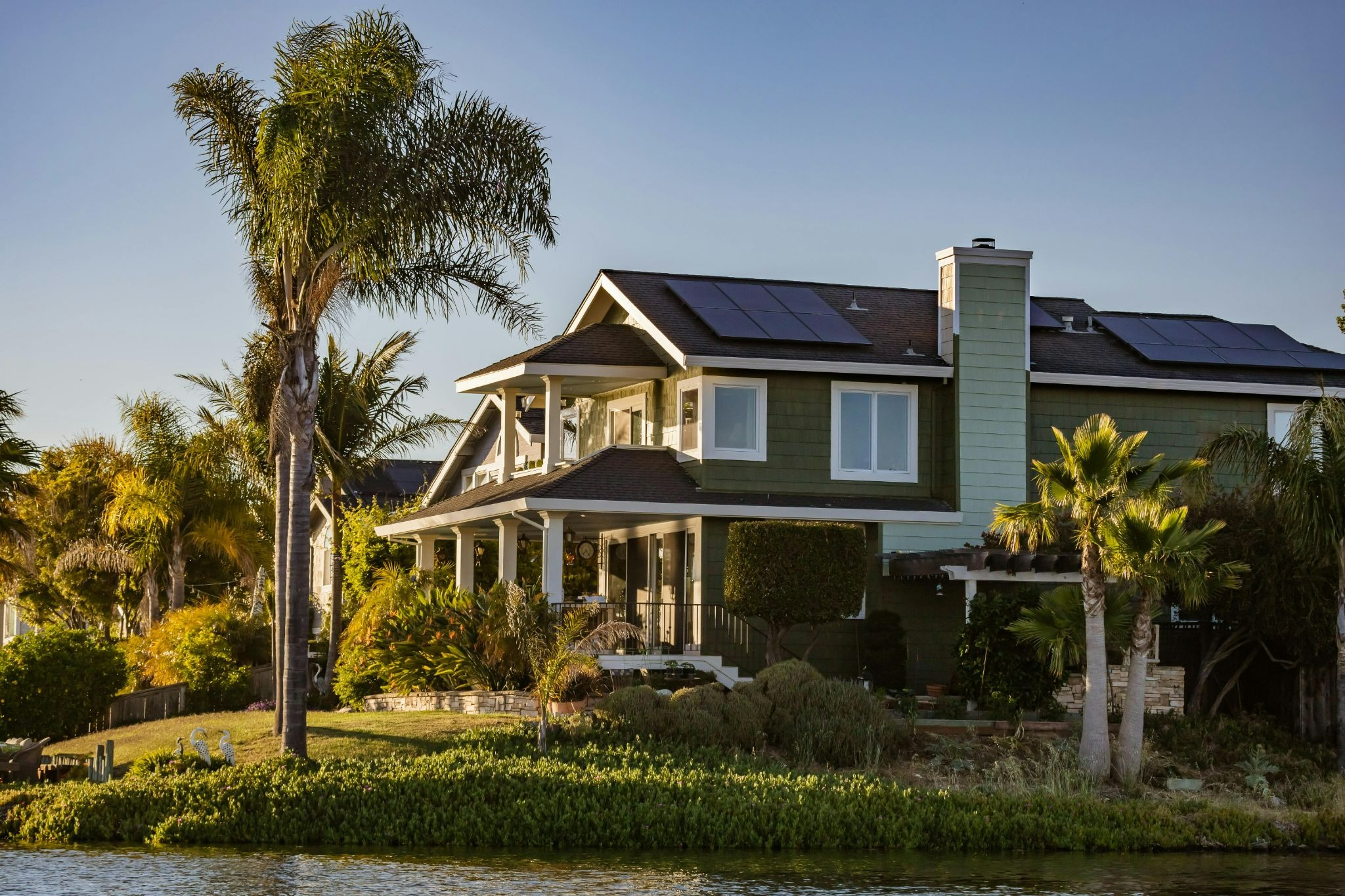
Roofs were once purely functional, serving as basic protection from the weather. That role has changed with the rise of solar-integrated roofing systems. Instead of attaching panels on top of a roof, solar shingles and tiles are built directly into the roofing surface, turning the structure itself into an energy generator.
This shift brings both practical and long-term advantages that go beyond electricity production:
- Generates renewable energy directly from the roof surface
- Replaces traditional roofing materials with dual-function systems
- Maintains a clean, integrated architectural appearance
- Designed for long service life, often 25 to 30 years or more
- Reduces long-term dependence on grid electricity
- Can be paired with battery storage for greater energy independence
- Eligible for incentives in many regions, improving cost efficiency over time
- Continues to offset energy use throughout its lifespan
While the upfront investment is higher than conventional roofing, the long-term savings and environmental benefits are significant. This makes solar panels an increasingly practical option for modern homes and renovations.
Takeaway
Building a modern home with eco-friendly materials is no longer a compromise. It is a smarter approach to construction. It delivers healthier living spaces, lower operating costs, and a significantly reduced environmental impact. Whether a homeowner focuses on structural elements or pays equal attention to finishes and insulation, every material choice adds up. And these choices shape a home that reflects a more thoughtful relationship with the planet.
The options covered here represent some of the best available today. The field continues to grow as research, innovation, and demand push the industry toward more sustainable construction practices.