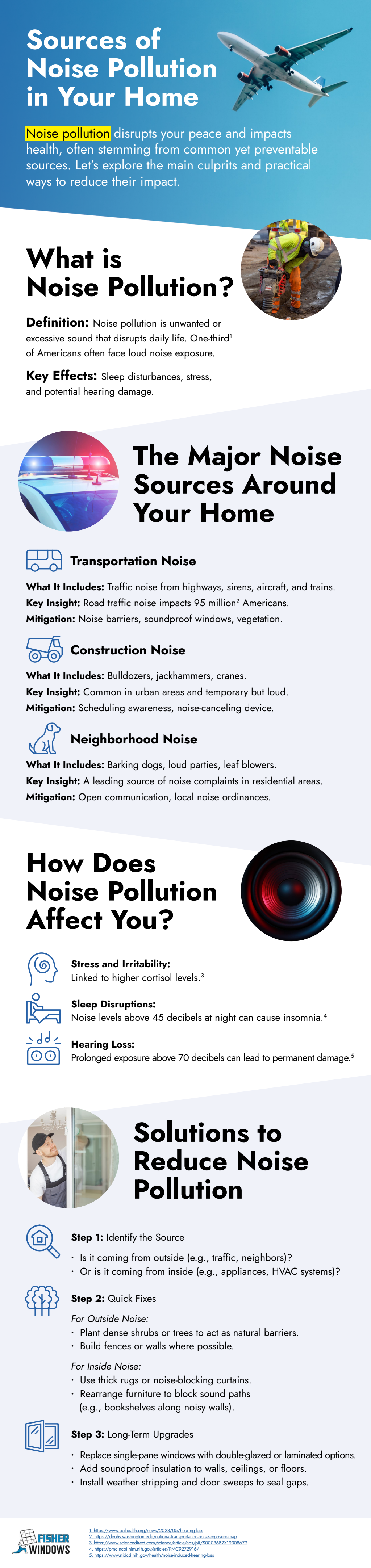
Noise pollution is often associated with busy streets or construction zones, but many of the most disruptive sounds come from much closer to home. For property managers, identifying where unwanted noise originates is essential for improving comfort, satisfaction, and long-term retention. Understanding both external and internal sources of household noise allows for more informed building decisions and effective mitigation strategies.
Outdoor Noise That Travels Indoors
External noise frequently enters a home through structural weak points. Traffic remains one of the most common contributors, especially for properties near highways, busy intersections, or delivery routes. Sirens, car horns, and engine sounds can travel surprisingly far, particularly in urban and suburban settings.
Construction activity is another major factor. Even temporary projects can create persistent disruption through heavy equipment, power tools, and delivery vehicles. Seasonal noise such as landscaping equipment, snow removal, and leaf blowers can also impact residents throughout the year.
Aircraft flight paths and rail lines present additional challenges. Low-flying planes or passing trains create vibration as well as sound, which can feel intrusive even when windows are closed. Poorly insulated walls and aging windows often allow these sounds to penetrate living spaces with little resistance.
Structural Gaps That Amplify Sound
Noise intrusion is often worsened by the building envelope itself. Gaps around windows, doors, and vents provide easy entry points for sound waves. Single-pane windows and deteriorating frames tend to transmit noise more readily than modern alternatives.
Walls without proper insulation can act as conduits rather than barriers. Older properties may lack sound-dampening materials altogether, making them especially vulnerable. In some cases, reviewing the window replacement process becomes a practical step toward reducing external noise while also improving energy efficiency.
Indoor Sources Residents Overlook
Noise pollution is not limited to outside influences. Inside the home, everyday activities can create significant disturbance. Appliances such as washing machines, dryers, dishwashers, and HVAC systems generate vibration and operational noise that may travel between units.
Plumbing systems are another frequent source. Water rushing through pipes, pressure changes, and poorly secured fixtures can create banging or humming sounds. Elevators, trash chutes, and mechanical rooms can also affect nearby units if not properly insulated.
Footsteps, furniture movement, and door closures contribute to impact noise, especially in multi-level buildings. Thin flooring materials and insufficient underlayment allow sound to travel vertically, often leading to resident complaints between floors.
Shared Walls and Community Noise
In multi-family properties, sound transmission between units is one of the most common concerns. Voices, televisions, music, and pets can all become disruptive when walls and ceilings lack adequate sound control. Even routine activities can feel intrusive without proper acoustic separation. Community spaces also play a role. Gyms, lounges, and outdoor gathering areas can generate noise that carries into residential units.
Addressing noise pollution requires awareness, planning, and consistent maintenance. By identifying where sound originates and how it travels, property managers can take meaningful steps to create more comfortable living environments. Reducing noise improves quality of life and strengthens the overall appeal of a property. Look over the infographic below to learn more.