



The eyewear retail landscape is evolving fast. Today's optical stores are no longer just places to buy glasses; they are curated brand experiences where customers spend longer, browse more frames, and make higher-value purchases. Behind every successful optical store lies a well-planned display cabinet system. From LED lighting that flatters every frame to wall-mounted rack layouts that maximize product visibility, every design decision directly affects conversion rates. This guide breaks down the key trends shaping optical store display cabinet design in 2026, with practical tips on lighting, frame presentation, and branding.
1. LED Lighting: The Backbone of Every Optical Display
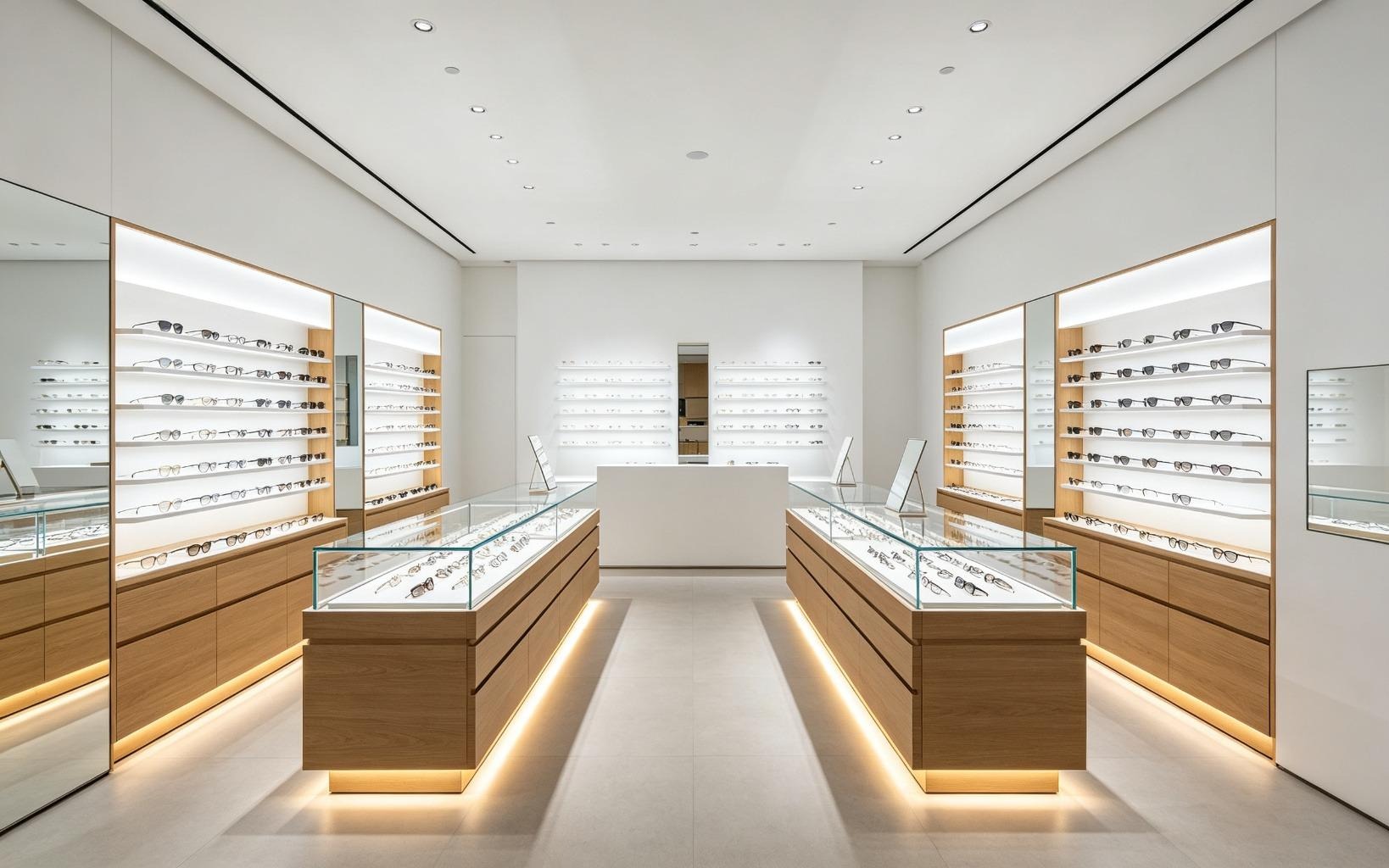
Lighting is the single most influential element in eyewear display design. Poor lighting makes even premium frames look dull, while well-placed LED strips can turn a standard cabinet into a luxury showcase. The current trend favors warm white (3000K–4000K) LED strips hidden beneath glass shelves and along cabinet bases, creating a floating effect that draws the eye upward through the product tiers.
Spotlights are equally important. Individual adjustable LED spotlights above each display bay let staff highlight new arrivals or premium collections without washing out the rest of the store. Anti-glare diffusers are now standard, ensuring that reflections do not obscure frame details when customers try on glasses.
2. Frame Display Solutions: From Wall Racks to Glass Counters
How frames are arranged determines how easily customers discover products. Wall-mounted rack systems remain the most space-efficient option, especially in small-format stores. The current design direction favors slim metal or brushed aluminum frames with clear acrylic tiers, keeping visual weight minimal so the glasses themselves stay the hero.
Island display counters are making a strong comeback. Positioned in the center of the sales floor, these low glass cabinets invite customers to pick up and try frames without sales pressure. Soft-close drawers underneath store inventory, while lockable glass tops protect high-value designer collections. Many stores now combine open wall racks for everyday frames with locked island counters for premium brands.
3. Branding and Visual Merchandising Tips
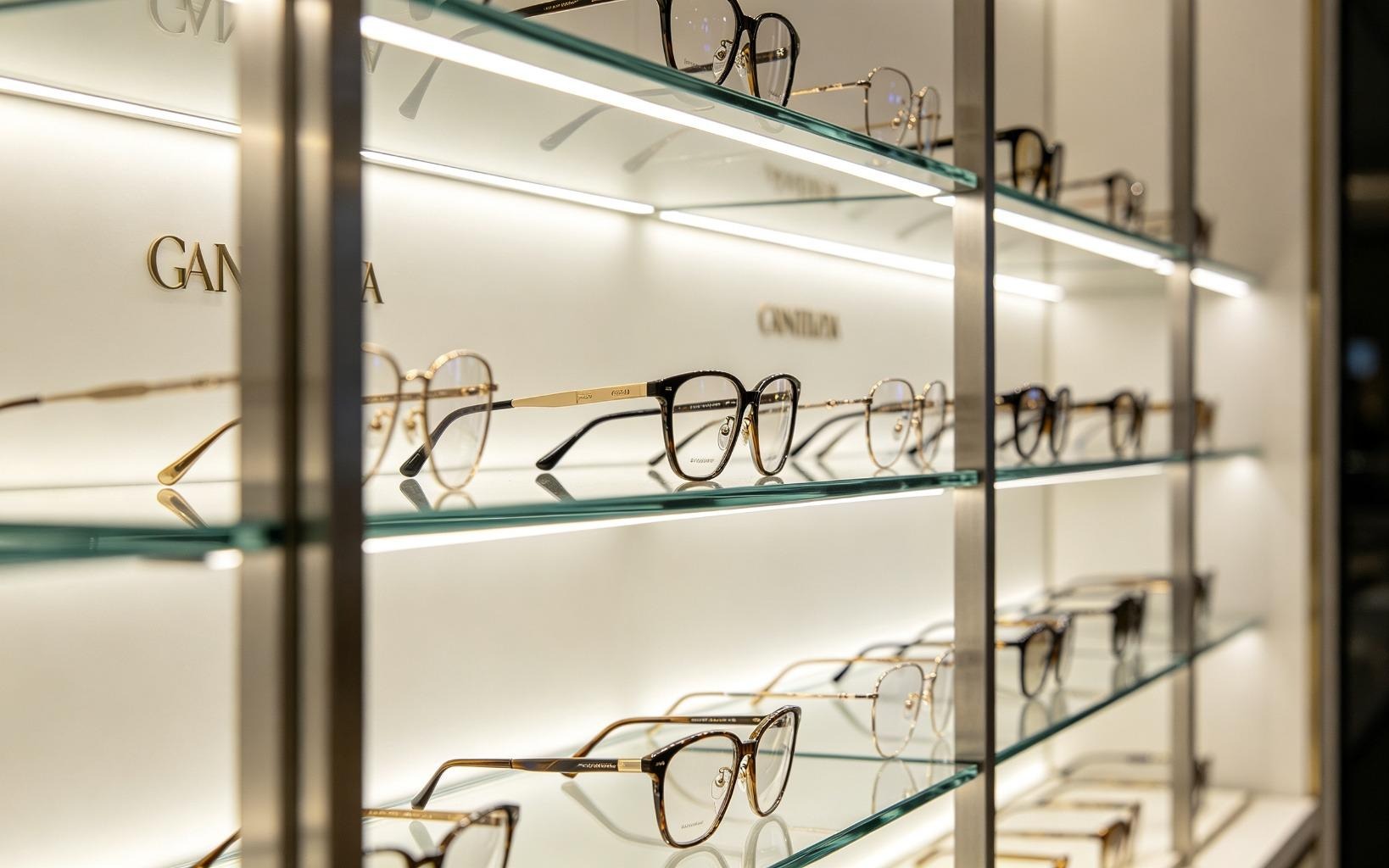
A display cabinet system should do more than hold products — it should reinforce brand identity. Consistent color palettes, branded lightbox panels, and logo placement at eye level all contribute to a cohesive store image. Many optical retailers now use backlit acrylic logos on the back wall of each display bay, creating a subtle branded backdrop that customers associate with quality.
Merchandising rhythm matters too. Group frames by shape, color family, or collection rather than mixing them randomly. Leave breathing room between product groups; overcrowded shelves reduce perceived value. Rotate featured displays seasonally to keep repeat customers engaged.
4. Partnering with a Professional Fixtures Manufacturer
Bringing these design trends to life requires more than off-the-shelf shelving. Rtdisplay is a professional store fixtures designer and manufacturer, they custom design retail shop fixtures, store displays and furniture for all kinds of retail shop. From initial 3D layout rendering to metal, wood, glass, and acrylic fabrication in-house, their team handles the entire project so optical store owners can focus on what they do best — serving customers. Whether you are opening a single boutique or rolling out a multi-location chain, a custom-built display system ensures your brand stands out.
To explore custom eyewear display cabinets and retail fixtures, visit Custom Shop Displays.
5. Comprehensive Shopfitting for Optical Retail
Beyond display cabinets, a complete optical store build involves ceiling treatments, flooring, consultation area design, reception counters, and optical testing rooms. Working with an experienced shopfitting partner ensures that every element — from the lighting circuit to the cabinet joinery — meets retail standards and local safety codes. A well-coordinated shopfitting project reduces on-site surprises and shortens the path from design to grand opening.
For end-to-end optical retail shopfitting solutions, see Retail shopfitting.
Conclusion
Optical store display cabinet design is a blend of lighting engineering, product merchandising, and brand storytelling. By investing in LED-lit glass cabinets, thoughtful frame display layouts, and consistent branding, optical retailers can create an environment that elevates the customer experience and drives higher average transaction value. Partnering with a specialist fixtures manufacturer ensures the final build matches the design vision down to the last detail.