



Navi Mumbai Airport Effect: Emerging Micro-Markets Within 40km Set to Benefit from the Region’s Biggest Infrastructure Catalyst
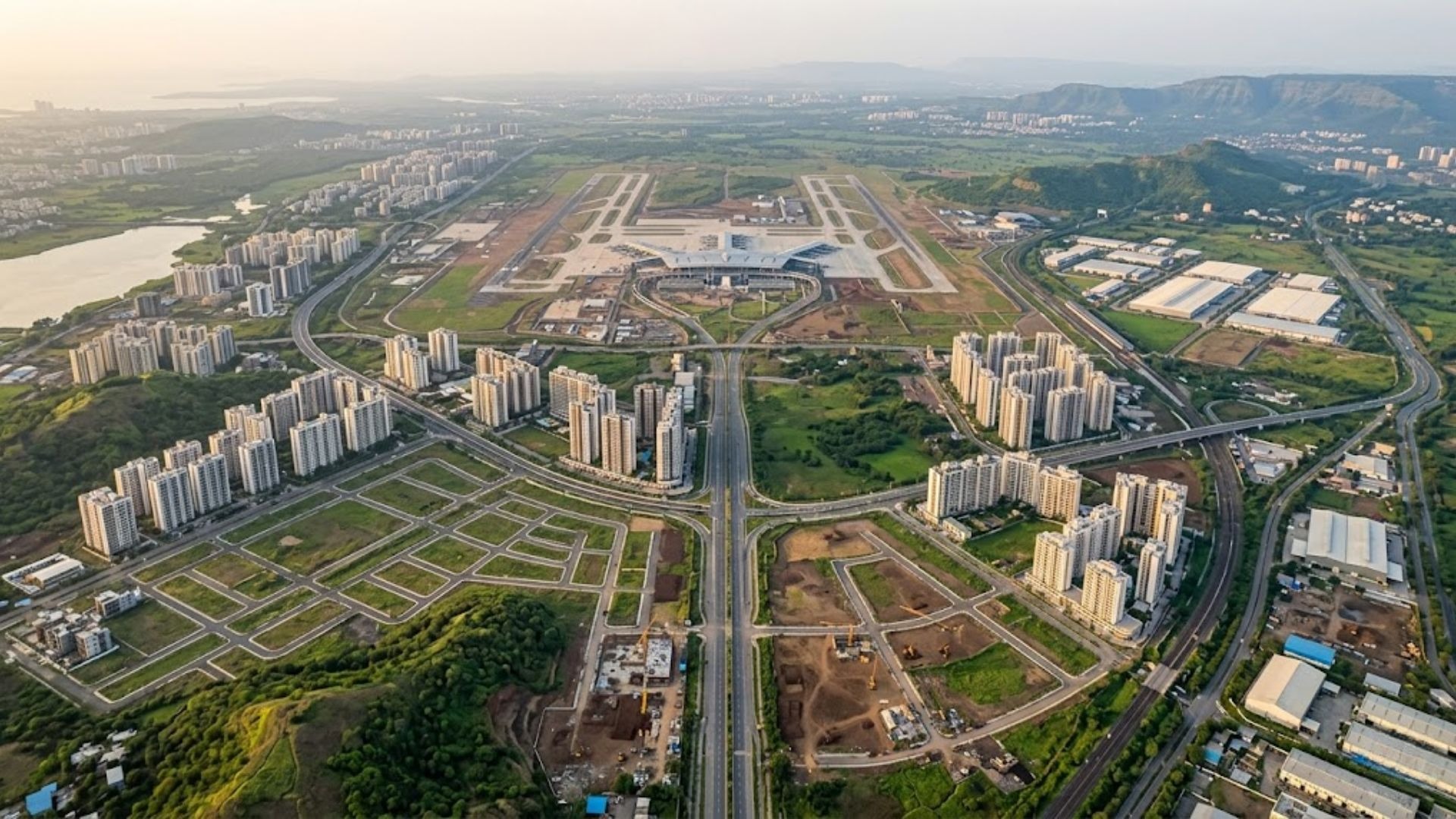
Major infrastructure projects have always influenced real estate growth. Airports, highways, metro corridors and business districts do more than improve travel. They reshape how people live, work and invest around a region.
The Navi Mumbai International Airport is one of the most important infrastructure developments for the Mumbai Metropolitan Region. As the airport moves towards phased operations and long-term expansion, investors are closely tracking nearby micro-markets that could benefit from improved connectivity, employment generation, commercial activity and rising residential demand.
For buyers who find central Mumbai and established Navi Mumbai locations expensive, this creates a new investment question: which emerging locations around the airport could see long-term value creation? This is where interest in Navi Mumbai airport land, plotted developments and surrounding growth corridors is increasing.
Why Airports Create Real Estate Growth Corridors
Airports usually become more than transport hubs. Over time, they can create new economic zones around them. Better connectivity attracts businesses, logistics companies, hotels, offices, retail activity and residential demand. As these uses grow, nearby land and property markets begin to respond.
This is why airport-led development is often seen as a strong driver of long-term property appreciation. When travel time reduces and commercial activity increases, locations that were earlier seen as distant can become more practical for end-users and investors.
Several Indian cities have already shown how airport influence can reshape real estate demand. Areas around Bengaluru airport, Hyderabad airport and Delhi NCR’s airport-led business zones saw stronger interest after connectivity and commercial activity improved. Navi Mumbai could follow a similar pattern, though the pace and scale of growth will vary across locations.
Navi Mumbai International Airport: A Game-Changing Infrastructure Project
The Navi Mumbai International Airport is designed to reduce pressure on Mumbai’s existing airport and support the region’s future aviation, cargo and commercial needs. Its long-term plan includes large passenger handling capacity, cargo infrastructure and better integration with road, rail, metro and trans-harbour connectivity.
The airport’s location near Ulwe and Panvel places it at the centre of a wider growth belt. The Mumbai Trans Harbour Link, Sion-Panvel Highway, Mumbai-Pune Expressway, JNPT connectivity and planned metro links are expected to improve regional access over time.
For investors, the important point is that large infrastructure projects often create value before the full ecosystem is mature. The early phase usually attracts attention from buyers who are willing to take a long-term view. As commercial, logistics and residential demand grows, surrounding locations can gradually become part of the larger airport-led development cycle.
Emerging Micro-Markets Within 40km of the Airport
Not all growth happens right next to an airport. In many cases, secondary and tertiary micro-markets benefit because they offer better affordability, larger land parcels and future expansion potential. Around Navi Mumbai International Airport, locations such as Panvel, Ulwe, Karjat, Khalapur and Pen are being watched closely.
Panvel
Panvel is one of the strongest beneficiaries of the airport-led growth story. It already has railway connectivity, highway access and proximity to major routes connecting Mumbai, Pune, Goa and the Konkan belt.
With the airport ecosystem expanding nearby, Panvel is likely to remain important for residential, commercial and logistics demand. For investors, it offers a balance of existing infrastructure and future growth potential.
Ulwe
Ulwe is directly linked to the airport influence zone. It has already seen residential development over the past few years and is expected to gain further attention as airport operations and supporting infrastructure improve.
Its proximity to the airport makes it relevant for professionals, service businesses, rental demand and commercial activity. However, buyers should evaluate project quality, location and pricing carefully because proximity alone does not guarantee returns.
Karjat
Karjat is attracting interest from buyers looking at plotted developments, weekend homes and long-term land ownership. Compared to central Navi Mumbai, it may offer better affordability and more open land formats.
As connectivity improves across the wider region, Karjat may benefit from Mumbai suburb growth and demand from buyers who want land outside dense urban pockets. Its appeal is also linked to lifestyle, nature and access to the Matheran belt.
Khalapur
Khalapur sits along important growth corridors connecting Mumbai and Pune. It is being watched by long-term investors because of its location, industrial surroundings and access to major highways.
For land investors, Khalapur can be relevant where the investment horizon is longer and the focus is on future infrastructure-led appreciation rather than immediate end-use demand.
Pen Region
The Pen region is emerging as a land investment destination because of its relative affordability, larger land availability and future connectivity benefits. As the airport and surrounding infrastructure mature, investors may continue to study Pen for plotted land and long-term development potential.
The key message is simple: property appreciation near airport zones may not be limited to the immediate airport neighbourhood. Wider micro-markets can also benefit when affordability, connectivity and long-term demand come together.
What Drives Property Appreciation Near Airports?
Several factors influence property appreciation near airport-led corridors. Improved connectivity is the first and most visible factor. Once roads, bridges, rail and metro links become stronger, the surrounding locations become easier to access.
Employment generation is another major driver. Airports create demand for aviation, logistics, hospitality, retail, transport and support services. Over time, this can create residential demand from people working in and around the region.
Industrial and logistics growth also plays an important role. Navi Mumbai already has the advantage of JNPT connectivity, warehousing demand and business activity across nearby belts. When this combines with airport infrastructure, the surrounding land market can become more attractive for long-term investors.
Limited supply of strategically located land is another factor. As the most accessible land parcels get absorbed, buyers often begin looking at nearby emerging locations where entry prices may still be more practical.
Why Land Investors Are Entering Early
Many land investors prefer to enter infrastructure-led markets before the full growth story becomes mainstream. Early entry can offer better pricing, more choice and longer appreciation potential.
This is one reason interest in Navi Mumbai airport land is rising. Investors are not only looking at ready residential properties but also at plotted developments and land opportunities in connected micro-markets.
For buyers exploring alternatives to expensive Mumbai real estate, airport-led locations can offer a different route to wealth creation. However, the approach should be disciplined. Land usually performs better over longer investment horizons, especially when the growth is linked to infrastructure, employment and planned development.
Evaluating Opportunities Around Airport Growth Corridors
Investors should not buy land only because it is near a major airport. The location must be studied properly. Buyers should verify title clarity, legal approvals, access roads, zoning, local development rules and future infrastructure plans.
It is also important to compare project pricing with nearby land values and understand what is being offered. A premium may be reasonable if the development includes better planning, internal infrastructure, legal clarity, amenities and professional management. But buyers should still understand the project site, distance from key roads, current surroundings and expected development timeline.
Site understanding is especially important in emerging locations. Investors should know what exists today and what is projected for the future before making a decision.
The Growing Preference for Branded Land Developments
As more buyers explore infrastructure-driven investment, branded land developments are gaining popularity. They offer a more organised experience compared to traditional land buying, where issues such as unclear paperwork, access roads, layout planning and maintenance can become difficult.
Professionally planned developments can offer defined plots, internal roads, basic infrastructure, amenities, documentation support and better investor confidence. This is especially useful for NRIs, first-time land buyers and investors who want a more structured ownership experience.
The House of Abhinandan Lodha has built its positioning around identifying future-ready destinations and creating branded land developments in emerging growth markets. Its broader philosophy fits well with infrastructure-led investing, where the focus is on entering high-potential corridors before they become fully mature.
Conclusion
The Navi Mumbai International Airport has the potential to reshape real estate dynamics across several surrounding micro-markets. Panvel and Ulwe may benefit from direct proximity and stronger urban demand, while Karjat, Khalapur and Pen could attract investors looking for affordability, plotted developments and longer-term growth.
For buyers seeking long-term value creation, the opportunity lies in understanding the full airport-led growth cycle rather than chasing short-term speculation. Connectivity, employment, logistics, commercial activity and residential demand will all play a role in shaping the region’s future.
As Mumbai suburb growth continues to move beyond traditional locations, disciplined infrastructure-led investing can remain one of the most effective approaches to land ownership. Investors increasingly prefer professionally managed land opportunities in high-growth corridors where infrastructure, connectivity and long-term demand converge.





