



A bedroom in a rental property has to do more with fewer permanent changes. Tenants may not be able to add built-in shelves, move electrical outlets, or make major alterations to the walls, so furniture has to carry more of the organizational load. One of the smallest pieces in the room can have an outsized effect on comfort: the bedside table.
The right piece keeps everyday items within reach, supports a lamp, gives a phone a reliable charging spot, and adds storage without crowding the bed. Because bedrooms are often tighter than living rooms, choosing well comes down to proportion and function more than decoration alone.
Measure the Space Beside the Bed
The first step is to measure the available floor area, including the distance from the bed to the wall, closet door, dresser, or bedroom entrance. A piece can look compact online and still interrupt movement if the room has narrow clearances.
Measure the height of the mattress as well. A bedside surface that is dramatically lower or higher than the top of the mattress can be awkward to use when reaching for a phone, glass of water, or lamp switch. The exact height does not need to match perfectly, but it should feel comfortable from a normal sleeping position.
Renters should also look at baseboards and outlet locations. If the wall outlet sits directly behind the planned furniture, make sure there is enough clearance for plugs and adapters. A shallow design may be especially useful where the walkway is limited.
Think About What You Actually Keep at Bedside
Before deciding how many drawers you need, make a short list of what normally accumulates next to the bed. Common items include a phone, charger, book, glasses, medication, headphones, tissues, hand cream, or a glass of water.
If most of those items can stay on the surface, a simple open table may be enough. If you prefer a visually calm bedroom, drawers or a cabinet can hide smaller objects. Open shelves are useful for books and baskets, but they tend to show clutter more quickly.
The best storage arrangement is the one that matches routine. Buying the largest cabinet available may add unnecessary bulk, while choosing a purely decorative table can lead to items piling up on the floor or bed.
Height is worth checking against the mattress before anything else.
Comfort should guide the decision more than a rigid design rule. In many bedrooms, the most convenient nightstand is close to mattress height because it allows a person to reach across without stretching upward or down toward the floor.
Platform beds often sit lower, while traditional frames and thick mattresses can be much taller. This is why product height should always be compared with the actual bed rather than judged from photos.
If two people share the room, both sides do not necessarily need identical furniture. Matching heights and similar visual weight can create balance even when one side needs more storage than the other.
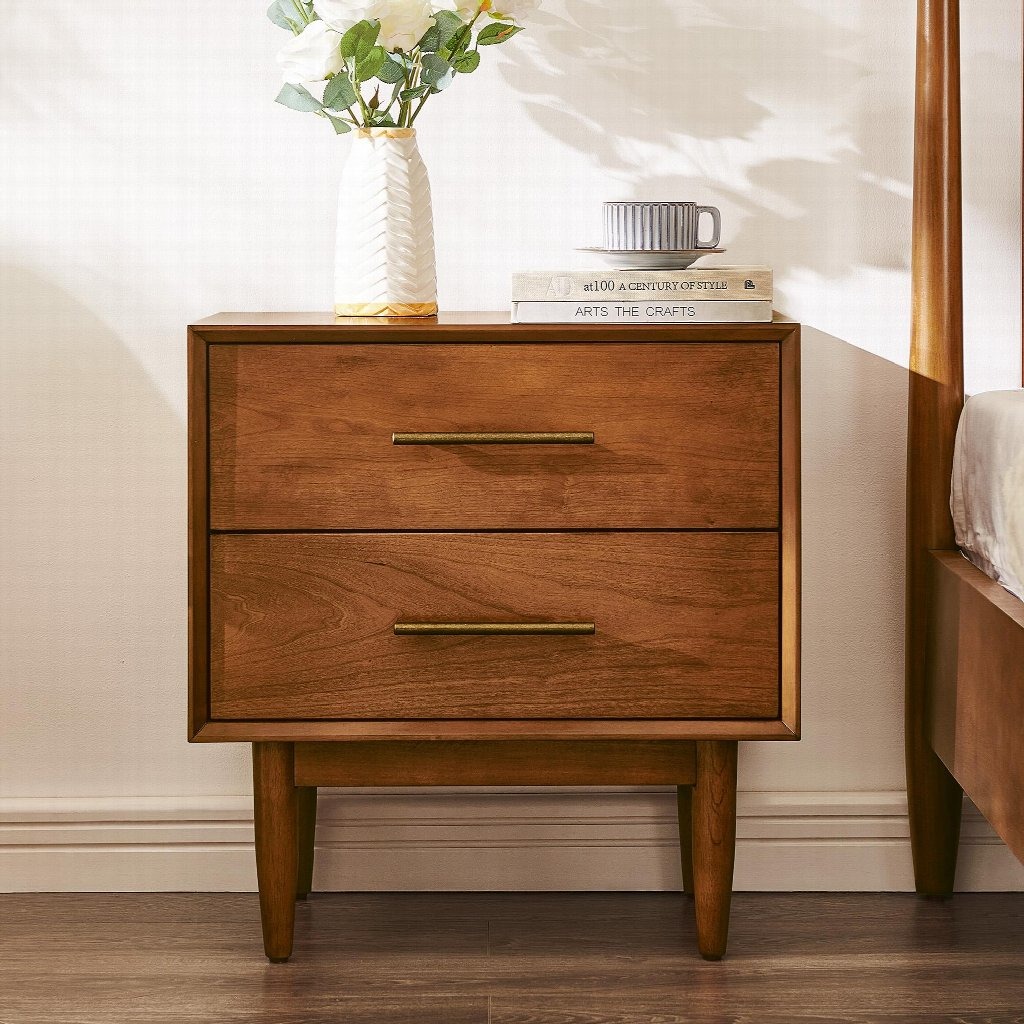
Surface area matters once the lamp, phone and everyday items are in place.
A bedside table can be narrow and still work well if the top is planned carefully. Think about the size of the lamp base, whether a charging dock will sit on the surface, and whether there needs to be room for a book or drink at the same time.
For a small bedroom, vertical organization can help. A compact lamp, wall-mounted reading light where permitted, or a tray for small items can reduce surface clutter. Renters who cannot install permanent fixtures may prefer a table lamp with a small footprint.
The surface finish should also be practical. If you regularly keep drinks nearby, a durable top that can be wiped clean is useful. Coasters can protect wood finishes and make everyday maintenance easier.
Look for Rental-Friendly Flexibility
Furniture that can move easily from one property to another is especially valuable for renters. A highly specialized piece may fit one bedroom perfectly but become difficult to use after a move.
Simple proportions, neutral finishes, and moderate dimensions are easier to adapt. A small bedside cabinet might later work as an end table, hallway storage piece, or compact office cabinet. That flexibility can make the purchase more useful over time.
Weight matters too. Very heavy furniture can be difficult to move upstairs or through narrow doorways. If a renter relocates frequently, a sturdy piece that is still manageable to carry may be a better choice than something oversized.
Plan for Charging Without Cable Clutter
Phones, smartwatches, earbuds, and tablets have turned the bedside area into a charging zone. Without a plan, power cords can quickly become tangled or stretched across the floor.
Check where the nearest outlet is and decide how cables will reach the surface. Adhesive cable clips can sometimes help organize cords without permanent drilling, but tenants should always use products that are appropriate for the wall or furniture finish.
A power strip should not be squeezed into an unsafe location or buried under bedding. The goal is to keep charging convenient while maintaining a clean, unobstructed area around the bed.
Consider Drawers, Shelves, and Doors
Each storage type supports a different habit. Drawers are ideal for small personal items that you want hidden but easy to reach. Open shelves make books and baskets visible. A small door can conceal larger objects and create a cleaner exterior.
In a shared rental, closed storage can also give each person a little more private space. If the bedroom has limited closet capacity, even one drawer can reduce surface clutter.
Pay attention to how drawers and doors open. A wide drawer may collide with the bed frame, while a cabinet door may need more side clearance than expected. Measure the open position, not only the closed furniture dimensions.
Matching sets are optional; a few repeated details are usually enough.
A bedroom does not need matching furniture to look intentional. A bedside piece can coordinate with the bed or dresser through color, wood tone, hardware, or shape without being identical.
This is useful for renters because it allows them to build a room gradually. A warm wood table can work with a neutral upholstered bed. A simple black cabinet can connect visually with black lamp hardware or picture frames. Repeating one or two details is often enough.
If the room is small, lighter finishes and raised legs can help the floor feel more visible. In a larger bedroom, a more substantial cabinet may provide useful visual balance beside a tall bed.
Do a Final Practical Check
Before ordering, confirm the width, depth, and height one more time. Visualize the piece with the bed, not as an isolated object. Make sure drawers can open, outlets remain accessible, and the walking path stays comfortable.
Also consider moving day. Will the furniture fit through the bedroom door? Can it be carried down a hallway or staircase? Could it serve another purpose in a future home?
A good bedside table should quietly improve the bedroom without demanding attention. When the scale is right, the storage matches daily habits, and charging is easy to manage, even a small piece of furniture can make a rental bedroom feel more organized and personal.