



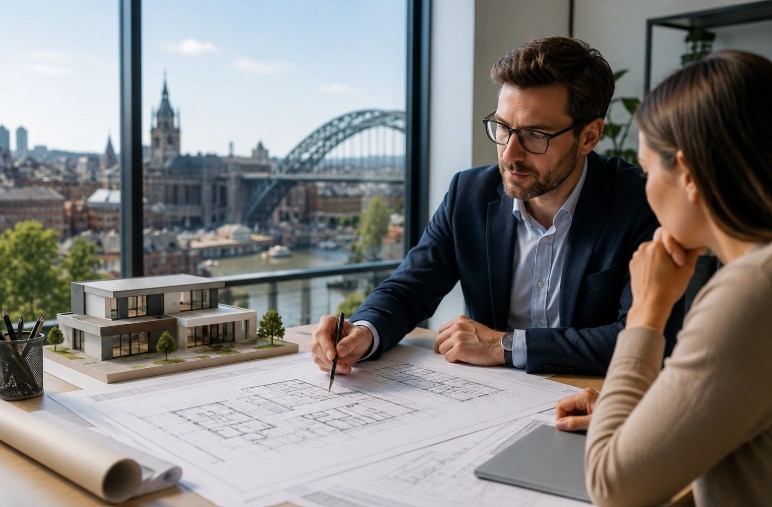
If you are planning a new home, a significant renovation or a commercial development in the Hunter region, working with an architect in Newcastle who understands the local landscape, council requirements and the specific demands of building in this part of New South Wales is one of the most important decisions you will make before a single sod is turned.
The right architect does far more than produce a set of drawings. They shape the way a building looks, feels and functions for the people who use it every day. They navigate the approval process, coordinate with engineers and builders, and advocate for your vision at every stage of the project. Getting this relationship right from the beginning sets the foundation for everything that follows.
This guide walks you through what to look for, what to expect and how to make a confident, informed decision when choosing an architect for your next Newcastle project.
Why Architecture Matters More Than Most People Realise
There is a common misconception that an architect is simply someone who draws up plans. In reality, a skilled architect brings together aesthetics, function, structural logic, environmental performance and regulatory compliance into a coherent design that works on every level.
Good architecture improves daily life in ways that are easy to overlook until you experience the difference. Natural light that flows through a home at exactly the right time of day. Spaces that feel generous without being unnecessarily large. A layout that makes sense for how a family actually lives rather than how a generic floor plan assumes they might. Outdoor areas that connect naturally with indoor spaces rather than feeling like an afterthought.
On a commercial project, good architecture goes further — it shapes how customers experience a space, how staff work within it and how a building presents to the street and the community around it. These things have measurable consequences for business performance and property value.
The difference between a building designed by an experienced architect and one that simply meets minimum requirements is not subtle. It is significant, lasting and felt every single day.
What to Look for When Choosing an Architect in Newcastle
Not every architect is the right fit for every project. Here is what genuinely matters when making your decision.
Demonstrated local experience
Newcastle and the broader Hunter region have their own character, climate, planning environment and building traditions. An architect with deep local experience understands how the light falls across different orientations at this latitude, how the coastal climate affects material selection, and how Hunter Valley Council and Newcastle City Council assess and process development applications.
Local experience also means established relationships with builders, engineers and certifiers in the region — relationships that make the practical side of delivering a project significantly smoother.
A portfolio that reflects your project type
Architecture firms tend to develop genuine expertise in particular project types. A firm with a strong portfolio of custom residential homes brings a different depth of knowledge to a new family home than one whose work is primarily commercial. Equally, a firm experienced in apartment developments brings different expertise to a multi-unit project.
Look at a firm's completed projects carefully — not just whether they are visually appealing, but whether they reflect the scale, complexity and character of what you are trying to achieve.
A clear, collaborative process
Architecture works best as a genuine collaboration between architect and client. A good architect listens carefully, asks the right questions and designs in response to your specific life, your values and your practical requirements — not in response to their own aesthetic preferences imposed on your situation.
Ask potential architects how they structure their design process. Do they involve clients in key decision points? How do they handle design changes as a project evolves? How do they manage the relationship between design ambition and budget reality? The answers to these questions tell you a great deal about what working with them will actually be like.
Relevant awards and recognition
Industry awards are not the only measure of quality, but they are a meaningful signal. Award-winning projects have been assessed against their peers by experienced practitioners in the field. A firm with a consistent record of recognition has demonstrated that its work is not just well-received by clients but respected by the broader architectural community.
Strong client testimonials
Past clients are the most reliable source of honest information about what it is like to work with an architectural firm. Look for testimonials that speak specifically to communication, responsiveness, the ability to solve problems under pressure and the quality of the finished result — not just general satisfaction.
The Types of Projects an Architect in Newcastle Can Help With
Architectural services in Newcastle cover a broad range of project types. Understanding which services are relevant to your situation helps you have a more productive initial conversation with any firm you approach.
Custom residential design
A custom-designed home is the most personal type of architectural project. Every aspect of the design — from the overall form and layout to the specification of materials and finishes — is tailored specifically to the client, the site and the way the family intends to live.
Custom residential design requires an architect who listens exceptionally well, has the design skill to translate a brief into something genuinely special and the technical ability to ensure the design can be built within a realistic budget and timeframe.
Renovations and extensions
Renovating or extending an existing home is in many ways more complex than designing from scratch. The architect must understand and work with what already exists — its structure, its character, its strengths and its limitations — while creating something new that feels coherent and resolved rather than added-on.
The best renovation architects have a strong intuition for how to connect old and new in a way that feels natural, and how to unlock the potential of a property that its owners may have stopped seeing clearly after years of living in it.
Apartment and townhouse developments
Multi-residential development in Newcastle requires architects who understand the specific planning requirements, site coverage rules and design standards that apply to higher-density residential projects. These projects also involve more complex approval pathways and require coordination across a larger team of consultants.
Commercial and community projects
Commercial architecture — from retail and hospitality spaces to office buildings and community facilities — requires a different set of skills and sensibilities from residential work. The design must work not just for the occupants but for customers, visitors and the public realm around the building.
Understanding the Architectural Process
For clients approaching their first significant building project, understanding what the architectural process actually involves removes a great deal of uncertainty.
The process typically begins with a detailed briefing stage — the architect getting to know you, your site, your project requirements and your budget in depth. From this, an initial concept design is developed that establishes the overall direction and key design moves.
Once the concept is refined and agreed, the architect develops the design into detailed documentation suitable for development approval. This documentation is submitted to Council and, once approved, further developed into construction documentation — the detailed drawings and specifications that builders use to price and build the project.
Throughout construction, a good architect remains involved — reviewing the builder's work against the drawings, responding to queries and requests for information, and ensuring that the design intent is realised in the finished building.
Frequently Asked Questions
Q: Do I need an architect for a home renovation in Newcastle?
Not every renovation legally requires an architect, but engaging one for anything beyond minor works is strongly advisable. An architect adds design value, navigates the approval process and helps avoid costly mistakes that often occur when complex work is undertaken without professional design input.
Q: How early in the process should I engage an architect?
As early as possible — ideally before you have committed to purchasing a property or decided on a specific design direction. An architect can provide valuable input on site selection, development potential and design feasibility that significantly affects the outcome of a project.
Q: How long does the architectural design process take in Newcastle?
Timeframes vary considerably depending on project complexity. A straightforward residential addition might move from initial briefing to development approval in three to four months. A custom new home or multi-residential project typically takes longer, particularly if the development application process involves additional assessment requirements.
Q: What does an architect in Newcastle charge for their services?
Architectural fees are typically calculated as a percentage of the construction cost or on a fee-for-service basis depending on the project and the scope of services engaged. It is worth discussing fee structures openly with any firm you approach — a good architect will be transparent about how their fees are structured and what is included.
Q: What is the difference between an architect and a building designer?
An architect is a registered professional who has completed an accredited degree program and is registered with the NSW Architects Registration Board. Building designers may offer similar drawing services but do not carry the same registration, professional standards requirements or scope of practice as a registered architect.
Q: Can an architect help with both the design and the council approval process in Newcastle?
Yes. Managing the development application process — preparing the required documentation, liaising with Council and responding to any requests for additional information — is a standard part of architectural services and an area where local experience and established Council relationships make a meaningful difference.
Final Thoughts
Choosing the right architect for a project in Newcastle is a decision worth taking seriously and making carefully.
The relationship between architect and client is a close and consequential one. It spans months or years, involves significant investment and shapes the outcome of something that will be part of your life — or your business — for a very long time.
Look for local experience, a portfolio that reflects genuine design quality, a collaborative working style and a track record that clients speak about with real enthusiasm. These qualities, more than any other, predict a successful architectural experience and a finished project you will be genuinely proud of.





