



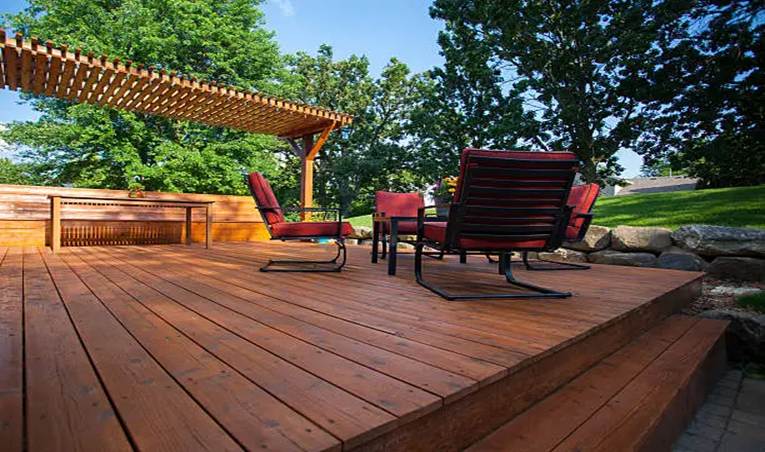
Outdoor wood in Charlotte needs protection from sun, rain, and humidity. Without care, decks and fences can fade, crack, absorb moisture, and develop serious damage sooner than expected.
Staining helps preserve the wood while improving its appearance. Regular maintenance helps spot small problems before they become expensive repairs.
Why Charlotte Weather Is Hard on Wood
Charlotte’s climate brings summer sunlight, rain, and humidity. These conditions can cause untreated wood to expand, shrink, dry out, and absorb water.
UV exposure can fade color and weaken the surface. Persistent dampness can lead to algae, mildew, and wood decay, particularly in shaded areas that dry slowly.
Choose the Right Type of Stain
Wood stains come in different transparency levels. The best choice depends on surface age and condition.
Common options include:
●Clear finishes that show most of the natural grain
- Semi-transparent stains that add color while keeping some grain visible
●Solid stains that provide fuller coverage for older wood
Clear finishes often need frequent maintenance. Solid stains may last longer, but they can hide more of the wood’s character. A professional deck and fence staining service can recommend an option based on exposure and wear.
Prepare the Surface Carefully
Stain performs best on clean, dry, and sound wood. Applying it over dirt, mildew, peeling coatings, or damp boards can lead to uneven color and early failure.
Preparation may involve cleaning the surface, removing loose material, sanding rough spots, and repairing damaged boards or fasteners. New wood may also need time to dry before staining, depending on its moisture level.
Pick the Right Time to Stain
Weather conditions matter during application. The wood should be dry, and the forecast should allow enough time for the product to absorb and cure without rain.
Very hot surfaces can cause stain to dry too quickly. Morning dew, high humidity, and direct afternoon sun may also affect the finish. Homeowners planning deck staining Charlotte projects should look for a mild, dry weather window rather than choosing a date based only on convenience.
Maintain the Finish During the Year
Stained wood still needs routine attention. Sweep decks regularly, remove leaves from corners, and keep soil or mulch away from fence boards and posts.
Watch for:
●Fading or uneven color
- Water soaking into the surface instead of beading
- Small cracks or splinters
- Green or dark mildew spots
●Loose nails, screws, or boards
These signs may mean the surface needs cleaning, repair, or another coat of stain.
Avoid Common Maintenance Mistakes
Do not apply stain over wet wood or assume every surface needs the same product. Too much stain can leave sticky areas, while too little may provide uneven protection.
Pressure washing should be done carefully because excessive force can damage soft wood fibers. Always follow the manufacturer’s drying, temperature, and application instructions.
Inspect High-Wear and Shaded Areas
Deck stairs, rail tops, entry points, and furniture areas usually wear faster than less-used sections. Fence boards near sprinklers, plants, or shaded property lines may stay damp longer.
Checking these areas several times a year helps homeowners address fading, moisture, and loose boards early. Regular inspections can extend the life of the wood and keep outdoor spaces safer.





