



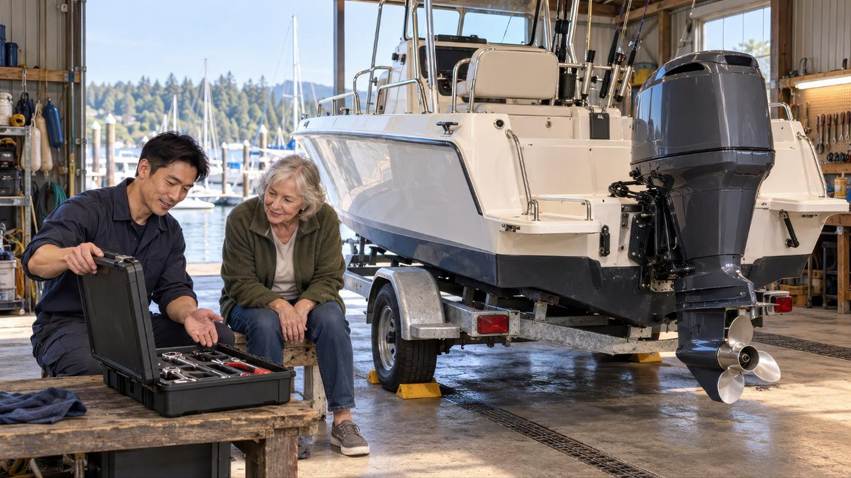
Living near the ocean makes it easy to end up with a boat, a camper or both. The trouble starts when the season ends. Many rental leases and strata bylaws do not allow a trailer boat or motorhome to sit in a driveway or visitor stall for months, and even when parking is allowed, salt air and winter rain can do real damage to anything left uncovered.
For renters in particular, storage is often the hidden cost of owning a recreational vehicle. Before you buy, or before the first big autumn storm, it helps to have a plan for where the vehicle itself will go and where all the gear that comes off it will live.
Check your lease and local rules first
Start with the paperwork. Many residential leases limit what can be parked on the property, and some ban boats, trailers and RVs outright. Strata buildings often have their own rules on top of that. Some coastal towns also restrict long-term parking of large vehicles on residential streets. A quick read of your lease and a call to your landlord or property manager can save you a towing bill or a dispute later.
If the vehicle cannot stay at home, the usual options are a marina or boat yard, a dedicated outdoor vehicle lot, or a farm or private property with space to rent. It is also worth separating the vehicle from its contents. Life jackets, cushions, fishing gear, camping chairs and bedding take up a surprising amount of room in a small rental, and they often do better indoors anyway. On the Sunshine Coast, for example, Bigfoot Storage runs a gated, fenced self-storage facility in Sechelt with month-to-month units, which suits the kind of seasonal overflow that boaters and campers tend to collect. Whatever you choose, ask about access hours, security and whether you can reach your things easily when the weather turns nice.
Getting a boat ready for the coastal off-season
Coastal weather is hard on stored equipment. Salt speeds up corrosion, months of mild rain invite mould, and wind can shred a loose cover in one storm. The work you do before storage matters as much as where you store.
Begin with a thorough wash. Rinse the hull, deck, trailer and any exposed metal with fresh water to remove salt. Pay attention to the trailer's brakes, bearings and springs, since these sit in salt water every time you launch.
Next, look after the engine. Follow the manufacturer's instructions for flushing outboards and inboards with fresh water and for treating the fuel. Many owners add a fuel stabilizer and run the engine briefly so it reaches the whole system.
Take out anything that can hold moisture or tempt a thief. Electronics, batteries, cushions, sails, life jackets and fishing gear are better off somewhere dry and secure. Batteries should be charged and kept on a maintainer if possible.
Finally, cover the boat properly. A fitted, breathable cover or professional shrink wrap with vents will keep rain out without trapping condensation. Tie it down well and check it after strong winds. If the boat is on a trailer, raise the tongue slightly so rainwater drains out of the cockpit.
Preparing an RV or camper
RVs have their own set of weak spots on the coast. The roof is the most important one. Walk around and over it, checking seals around vents, skylights and seams. Small gaps that look harmless in summer can let in a lot of water over a wet winter.
Empty and drain the fresh, grey and black water tanks, and follow your manufacturer's guidance for winterizing the plumbing if freezing temperatures are possible where you live. Clean out the fridge and leave the door propped open. Remove food, paper products and bedding, which attract mice and absorb moisture.
Moisture control is the next job. Crack a roof vent if it is covered, and consider moisture absorbers inside. Check the tires, inflate them to the recommended pressure and cover them to protect against UV. If you can, move the RV a little every few weeks so the tires do not develop flat spots.
Propane tanks need care too. Turn them off at the valve and follow local rules on where they can be kept.
A short pre-storage checklist
Before you lock up for the season, run through these basics:
- Rinse off salt and dry everything thoroughly
- Remove batteries, electronics, soft goods and food
- Treat fuel and service the engine as the manual directs
- Use a breathable, well-secured cover
- Take photos of the vehicle's condition for your records
- Confirm your insurance covers the vehicle while it is in storage
That last point catches many people out. Some policies change when a boat or RV is laid up or kept off your property, so call your insurer and ask.
Spring launch and the paperwork
When the days get longer, set aside time for a proper check before the first trip. Inspect covers, seals, tires and trailer lights. Reinstall batteries and electronics, look for signs of rodents, and run the engine or generator before you are far from help.
Spring is also a good moment to make sure your boat's paperwork and safety gear are current. In Canada, Transport Canada sets the rules for pleasure craft licensing, operator competency and the safety equipment that must be on board. Reviewing those requirements while the boat is still on the trailer is much easier than discovering a missing item at the dock.
Planning ahead pays off
For renters and homeowners alike, the simplest approach is to decide on storage before you need it, prepare the vehicle carefully for the coastal climate, and keep the loose gear somewhere dry and organized. A little effort in the autumn means more time on the water or the road when the good weather returns.





