



Renovation projects often reveal more than outdated finishes. In properties built before the 1980s, materials such as insulation, floor tiles, and ceiling textures may contain asbestos. Anyone planning demolition or structural updates should understand the risks before disturbing older building components. Learning about asbestos abatement in Colorado helps prevent exposure, protect property value, and ensure compliance with safety regulations.
Here is why awareness matters before any walls come down.
What Is Asbestos and Where Might It Be?
Asbestos is a naturally occurring mineral once widely used in construction for its strength and resistance to heat. For decades, manufacturers added it to insulation, cement products, joint compound, adhesives, and textured coatings.
Let’s break it down. Asbestos becomes dangerous when fibers are released into the air. That typically happens when materials are cut, drilled, scraped, or begin to deteriorate. The fibers are microscopic and can remain airborne long enough to be inhaled.
Common building materials that may contain asbestos include:
- Popcorn ceilings
- Vinyl floor tiles and backing
- Pipe and boiler insulation
- Cement siding
- Drywall joint compound
The Environmental Protection Agency explains that intact materials in good condition may not pose immediate risk. Disturbance is what creates exposure concerns.
Why Exposure Is a Serious Issue
Asbestos related illnesses develop after repeated or long term inhalation of airborne fibers. The Centers for Disease Control and Prevention reports that exposure can increase the risk of lung disease, including asbestosis and certain cancers.
Here is why proper handling is essential. Once fibers become airborne, they can travel beyond the immediate work area. HVAC systems and foot traffic may spread contamination throughout a property.
Because of these risks, federal and state agencies regulate how asbestos is tested, removed, and disposed of.
When Testing Is the Smart First Step
Before beginning a remodel, testing provides clarity and direction. It is especially important when:
- The property was constructed before the early 1980s
- Renovations involve removing ceilings, walls, or flooring
- Building materials show signs of wear or damage
- An inspection flags potential asbestos containing materials
Professional inspectors collect samples using controlled procedures and submit them to certified laboratories. Results confirm whether asbestos is present and guide next steps.
Here is why testing matters. Starting demolition without confirmation may increase contamination and lead to higher cleanup costs later.
Understanding the Abatement Process
Asbestos abatement is a regulated environmental service. It is not the same as standard demolition.
The process begins with assessment and planning. Licensed professionals evaluate the affected area and design a containment strategy based on regulatory guidelines.
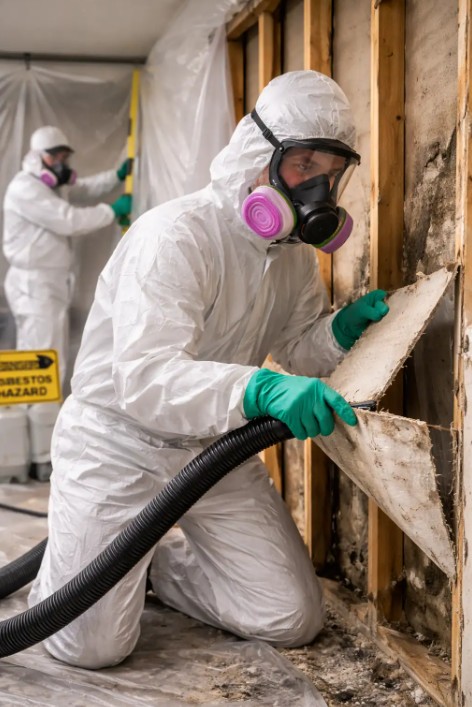
Containment is critical. Work zones are sealed using plastic barriers and negative air pressure systems to prevent fiber migration. Protective equipment, including respirators and disposable suits, reduces worker exposure.
Careful removal follows. Technicians use approved techniques to minimize fiber release. Removed materials are sealed in labeled containers for transport to authorized disposal facilities.
The Occupational Safety and Health Administration provides strict safety standards that govern asbestos handling and worker protection.
Final cleaning and verification complete the process. Air monitoring may confirm that fiber levels are within acceptable limits before the area is reopened.
Why DIY Removal Creates Bigger Problems
Television renovation projects often make demolition look straightforward. Asbestos removal requires specialized training and equipment.
Improper removal can:
- Increase airborne fiber levels
- Contaminate adjacent rooms
- Spread particles through ventilation systems
- Lead to regulatory penalties for improper disposal
Attempting removal without containment and filtration equipment can turn a limited issue into widespread contamination.
Real Estate and Renovation Considerations
Asbestos concerns frequently surface during inspections and property transactions. Buyers may request documentation showing that suspect materials were tested and, if necessary, professionally removed.
Clear records of abatement protect both parties in a transaction. They demonstrate responsible maintenance and regulatory compliance.
Property managers also benefit from proactive planning before remodeling projects begin. Addressing potential asbestos issues early reduces project delays and liability concerns.
Practical Safety Guidelines
If older building materials are present, take these precautions:
- Avoid disturbing suspect surfaces
- Do not sand, drill, or scrape materials without testing
- Restrict access to damaged areas
- Arrange professional sampling
- Follow licensed abatement recommendations
Here is why caution is effective. Leaving materials undisturbed until properly evaluated limits the chance of fiber release.
The Value of Experienced Professionals
Environmental services require knowledge of regulations, containment techniques, and disposal requirements. Licensed professionals coordinate each phase of abatement to ensure compliance and safety.
Experienced teams understand how to manage containment zones, monitor air quality, and document every step of the process. That documentation becomes important for insurance claims and future property sales.
Next Steps
If renovation plans involve older materials, pause before starting demolition. Confirm whether asbestos is present through professional testing. Early evaluation protects health and prevents costly complications.
When removal is necessary, rely on trained specialists who follow established containment and safety protocols. For structured asbestos abatement services performed with careful planning and regulatory compliance, contact HRS Restoration Services to discuss your project and receive professional guidance.





